Common Deck Failures and How Regular Inspections Can Prevent Them
Decks are designed to provide safe, functional outdoor living space, but constant exposure to weather, moisture, heavy loads, and everyday use can gradually weaken critical structural components. Many deck failures do not happen because of one isolated problem; instead, deterioration, poor connections, inadequate maintenance, and hidden structural deficiencies can build up over time until the deck can no longer safely support its intended loads. Recognizing potential problems early is one of the most effective ways to reduce the risk of a serious deck failure.
Routine deck inspections give homeowners, HOA managers, and commercial property owners an opportunity to identify deterioration before it becomes a major safety concern. From loose ledger connections and corroded fasteners to rotting support posts and damaged guardrails, an inspection can uncover problems that are easy to overlook during normal use. Understanding the most common causes and warning signs of deck failures can help property owners make informed decisions about maintenance, repairs, and professional evaluation.
Why Do Deck Failures Happen?
A deck is a structural system composed of multiple interconnected elements. Deck boards, joists, beams, posts, footings, ledgers, fasteners, stairs, and railings all need to perform properly for the structure to remain safe.
Because these components work together, deterioration in one area may place additional stress on another. A weakened beam, loose connection, or failing post can affect the stability of a much larger section of the deck.
Some of the most common contributing factors behind deck failures include:
Improper or deteriorated connections
Wood rot and moisture damage
Corrosion of nails, screws, bolts, or other hardware
Inadequate structural support
Poor original construction
Excessive loads
Foundation or footing movement
Deteriorated railings and stairs
Deferred maintenance
Termite or other wood-destroying pest damage
Aging building materials
Modifications made without evaluating the original structure
Deck problems can develop gradually, making regular inspections especially valuable for older structures or decks exposed to harsh environmental conditions.
1. Ledger Board and Connection Failures
One of the most important areas of an attached deck is the ledger board. The ledger is typically the horizontal structural member connecting the deck to the building.
Problems can develop when the ledger is improperly attached, when connections loosen, or when moisture penetrates between the deck and the building. Because the ledger carries significant loads, deterioration in this area can contribute to a sudden deck failure.
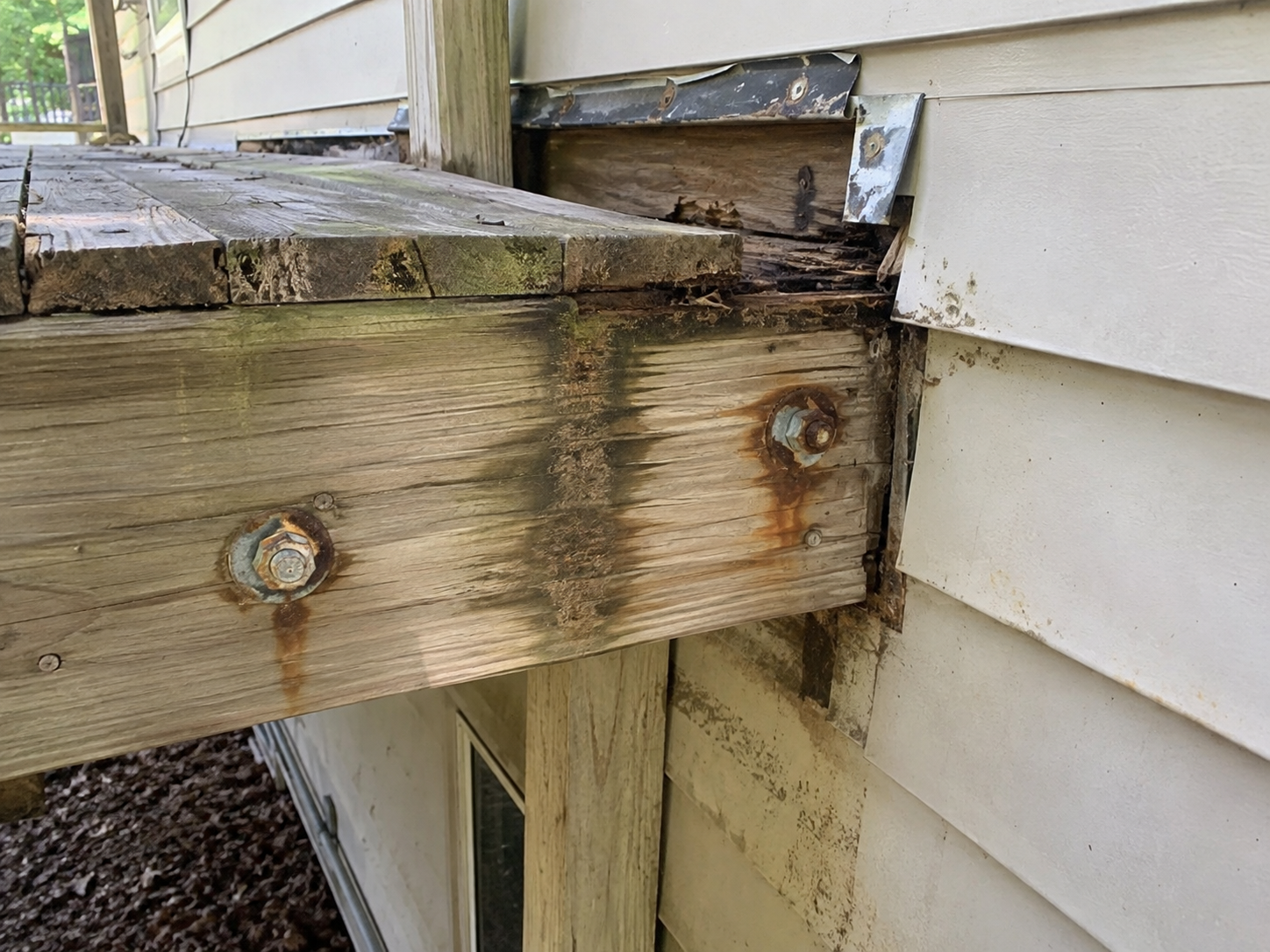
Warning signs may include:
Visible gaps between the deck and building
Loose or missing bolts or fasteners
Rusted hardware
Rot or soft wood near the connection
Movement where the deck meets the structure
Water staining around the ledger
Damaged or missing flashing
Ledger problems are particularly important to identify because significant deterioration may not always be visible from the walking surface of the deck.
2. Wood Rot and Moisture Damage
Water is one of the most persistent threats to wood-framed decks. Rain, irrigation, inadequate drainage, leaking building components, and repeated moisture exposure can cause wood to deteriorate over time.
Rot is especially likely to develop where water becomes trapped rather than draining or drying quickly. Areas around fasteners, joist connections, beams, posts, and ledger boards may be particularly vulnerable.
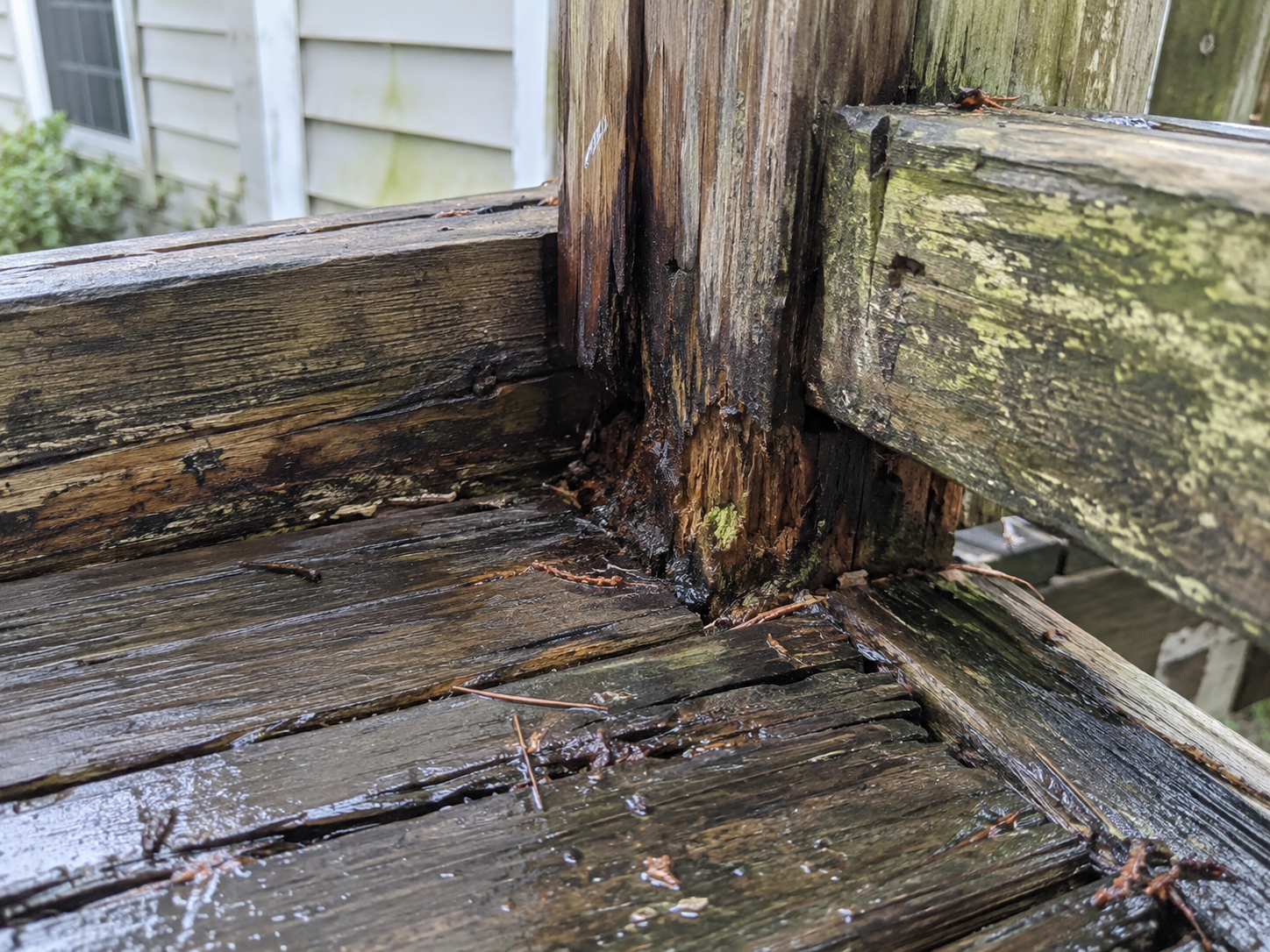
Signs of moisture-related deterioration can include:
Soft or spongy wood
Cracking or splitting
Dark discoloration
Flaking or crumbling material
Visible fungal growth
Persistent dampness
Sagging structural members
Surface appearance alone does not always reveal the full extent of deterioration. Structural components beneath the deck should also be evaluated during a thorough inspection.
3. Corroded or Loose Fasteners
Deck construction relies heavily on connectors such as screws, nails, bolts, brackets, joist hangers, and other metal hardware. These relatively small components play a major role in transferring loads safely throughout the deck.
Moisture and environmental exposure can gradually corrode metal connections. Fasteners may also loosen as wood expands, contracts, ages, or deteriorates.
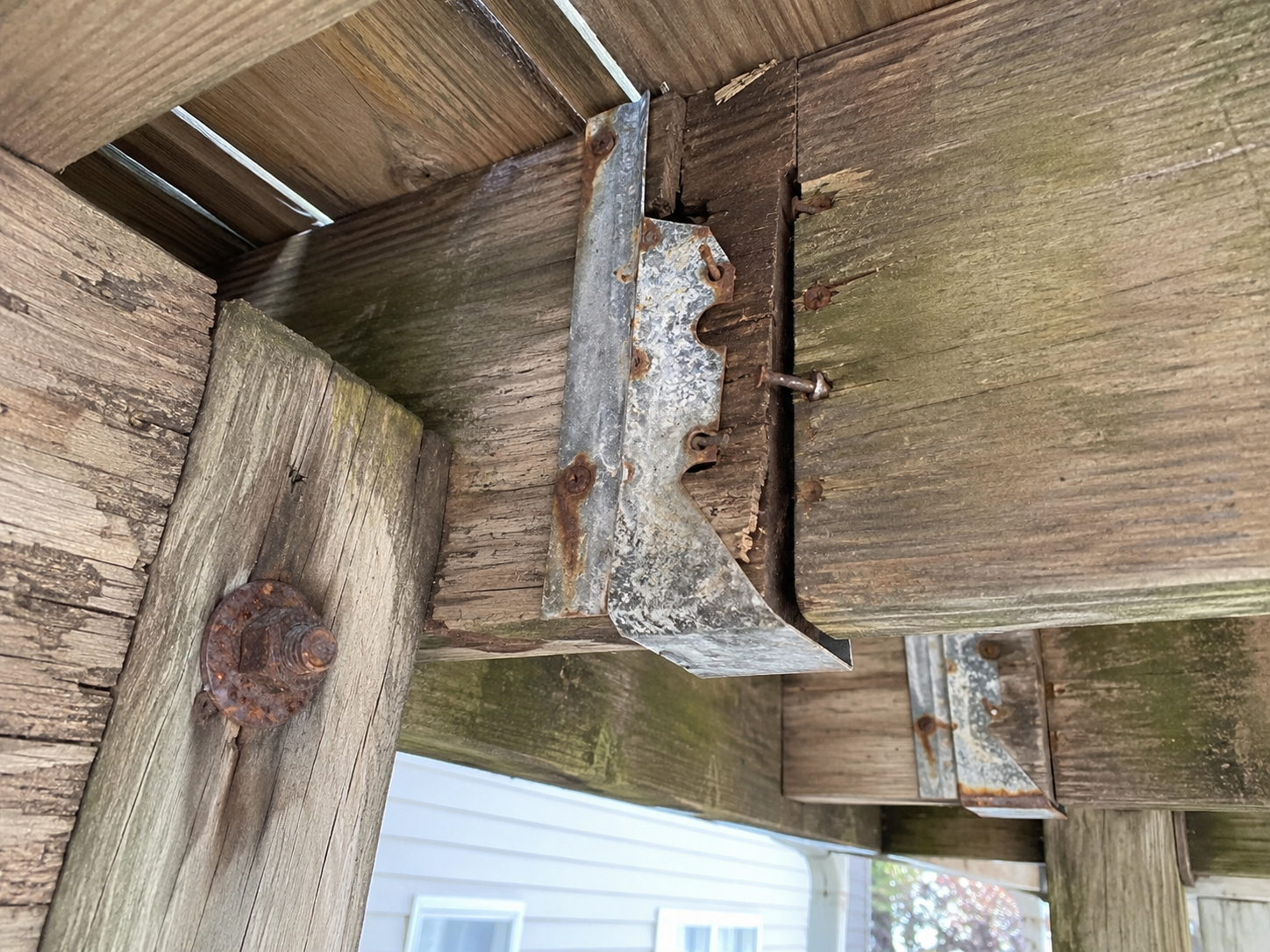
Property owners should watch for:
Rusted bolts or screws
Missing fasteners
Loose connections
Pulling or separating hardware
Corroded joist hangers
Nails backing out of the wood
Cracked wood around bolts or connectors
A deck may appear sturdy from above while important connections underneath are deteriorating. This is one reason visual checks of the deck surface should not replace a more comprehensive professional inspection.
4. Weak or Deteriorated Support Posts and Beams
Beams and support posts carry the weight of the deck and transfer loads toward the foundation or footings. Damage to these structural components can affect the stability of the entire system.
Posts may deteriorate where they contact soil, concrete, or areas that regularly collect moisture. Beams can experience rot, cracking, improper connections, or excessive deflection.
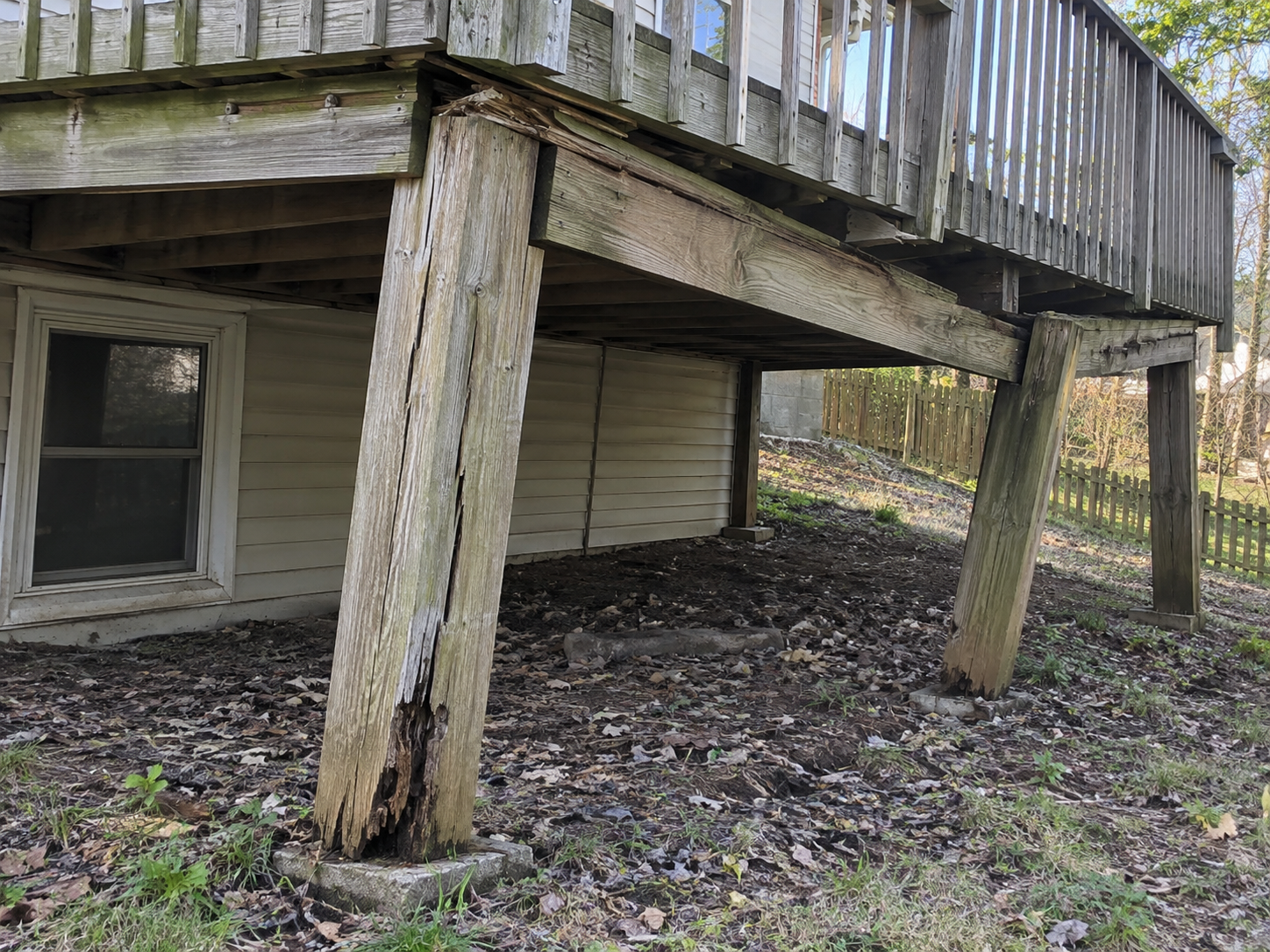
Common warning signs include:
Leaning posts
Splitting or cracking
Rot at the bottom of a post
Sagging beams
Bowing structural members
Loose post-to-beam connections
Visible shifting of the deck structure
Any noticeable change in the position of a structural support should be evaluated rather than simply treated as a cosmetic problem.
5. Failing Footings or Foundation Movement
A deck is only as stable as the support beneath it. Footings are intended to transfer deck loads safely into the ground, but inadequate installation, settlement, erosion, or changing soil conditions can cause movement.
Problems with footings may lead to uneven deck surfaces, leaning posts, separation at connections, or sagging sections.
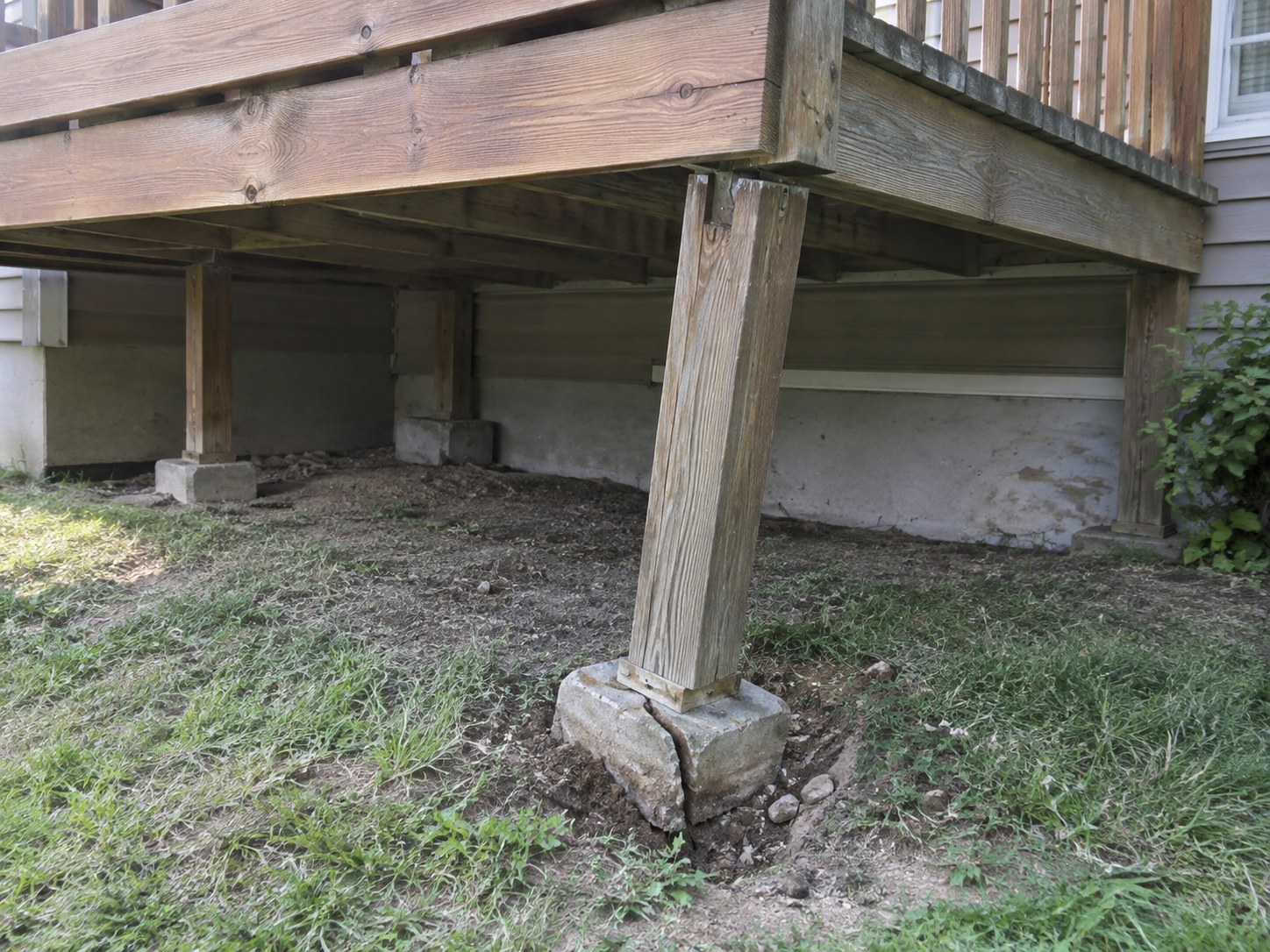
Potential warning signs include:
Uneven deck surfaces
Posts that appear to be sinking
Tilting structural supports
Cracked concrete footings
Soil erosion around supports
Gaps forming at connections
Sections of the deck moving independently
Changes in deck elevation or alignment can indicate that the issue extends beyond the decking itself and into the underlying support system.
6. Joist Deterioration or Improper Support
Joists are horizontal structural members that support the deck surface and transfer loads to beams or other supports. Deteriorated joists can cause excessive movement, sagging, or localized weaknesses.
Common joist-related problems include moisture damage, rot, cracking, poor fastening, insufficient support, and deteriorated joist hangers.
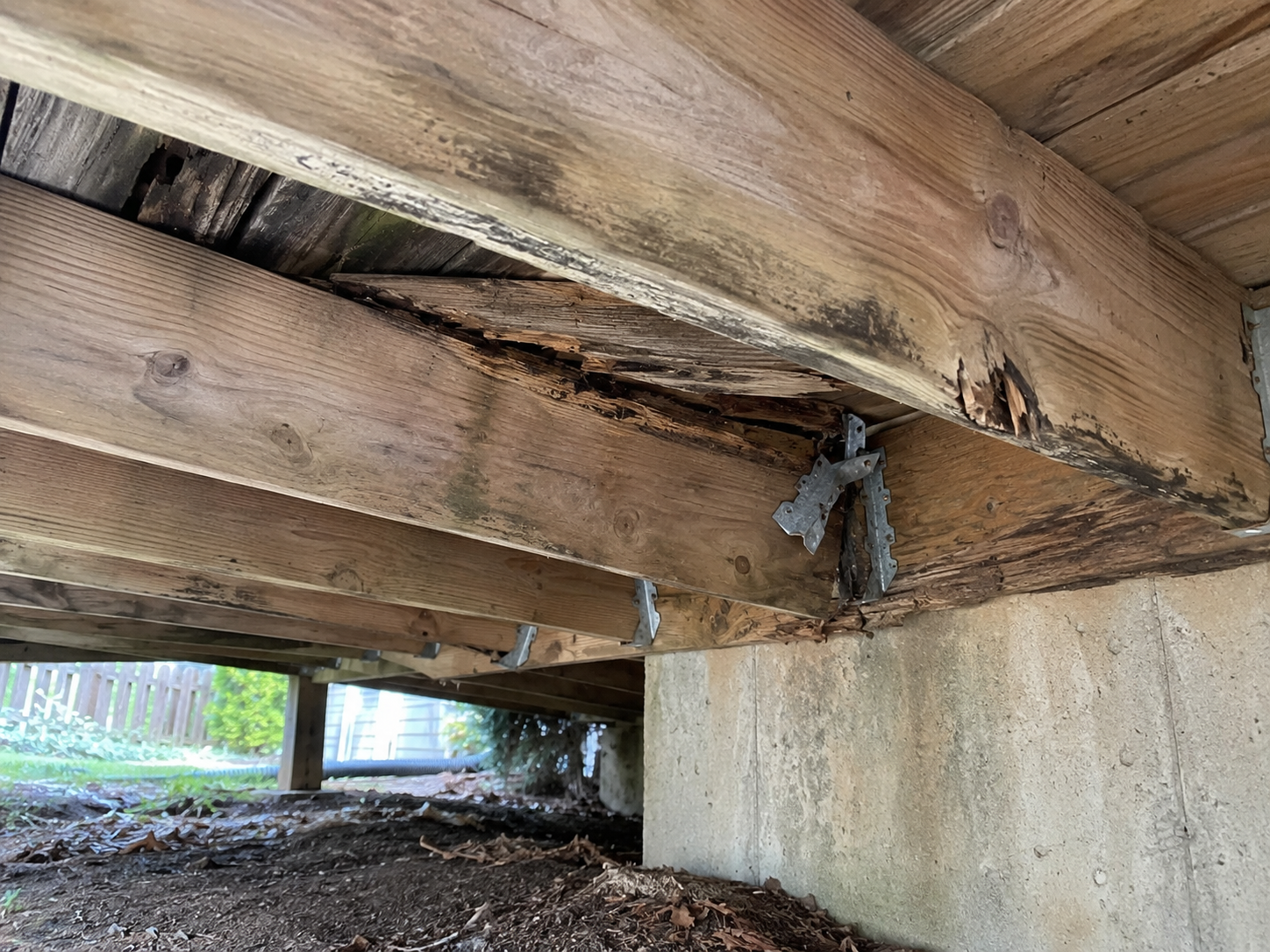
Warning signs may include a deck surface that feels unusually flexible or bouncy, visible sagging between supports, damaged wood underneath the decking, or loose connections at joist ends.
Because joists are largely hidden beneath deck boards, these conditions may go unnoticed without examining the underside of the structure.
7. Guardrail and Railing Failures
Not every deck failure involves the entire structure collapsing. A loose or deteriorated guardrail can create a serious fall hazard even when the deck framing itself remains stable.
Railings experience repeated loads as people lean against them, and outdoor exposure can gradually weaken posts, connections, and surrounding wood.
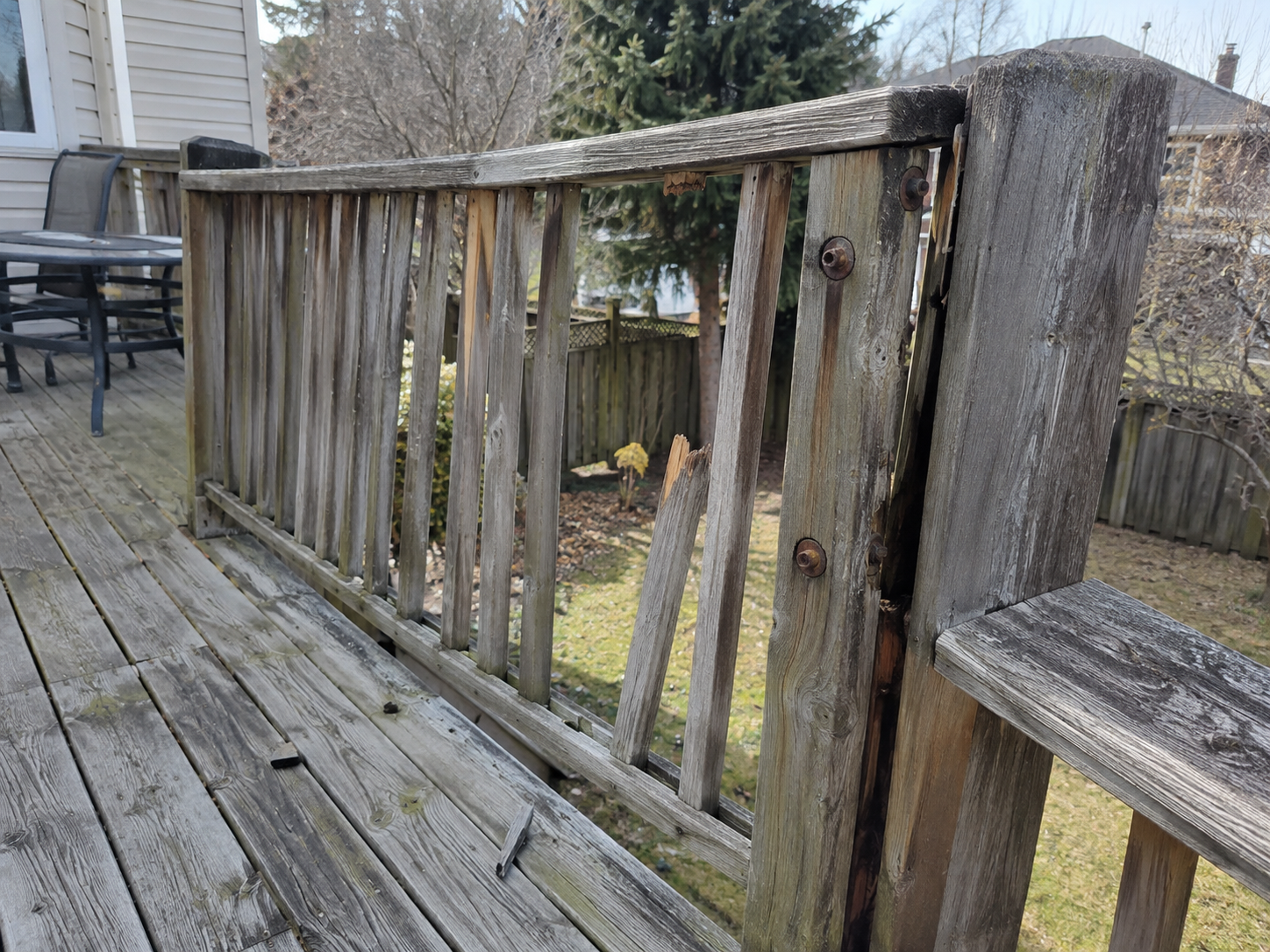
Property owners should pay attention to:
Wobbly railings
Loose guard posts
Missing balusters
Cracked wood
Corroded connectors
Movement when pressure is applied
Separation between railing components and the deck structure
Loose railings should not be ignored, particularly on elevated decks where a fall could cause serious injury.
8. Deteriorated Deck Stairs
Deck stairs experience significant foot traffic and repeated exposure to weather. Stringers, treads, handrails, landings, and connections can all deteriorate over time.
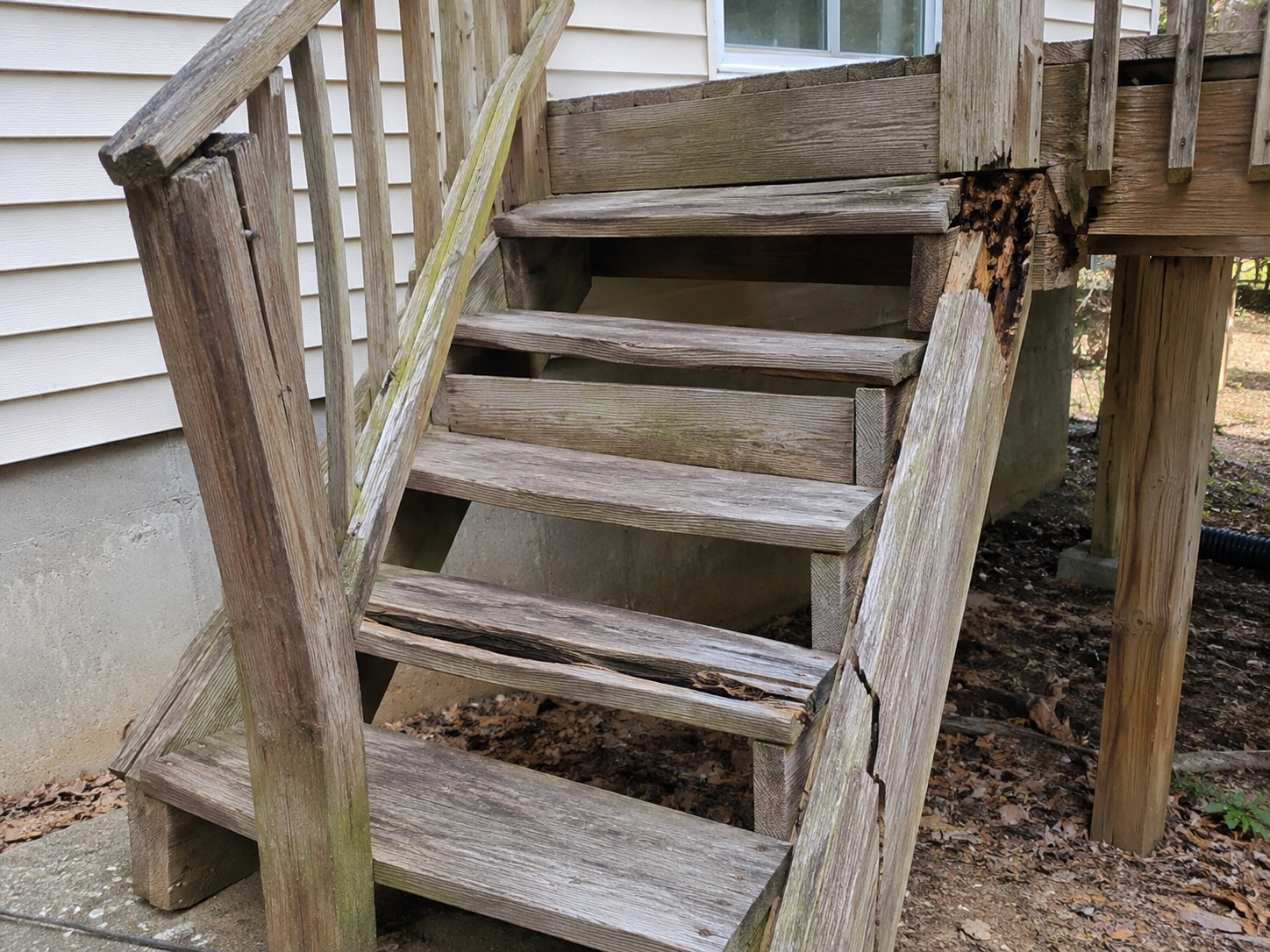
Common warning signs include:
Loose stair treads
Cracked stringers
Uneven steps
Wobbly handrails
Rot near stair connections
Movement when walking on the stairs
Separation between stairs and the deck
Stair deterioration can create trip and fall hazards even before it threatens the larger deck structure.
9. Overloading the Deck
Decks are engineered and constructed to support specific loads. Problems can occur when a deck is asked to carry substantially more weight than its structure was designed to handle.
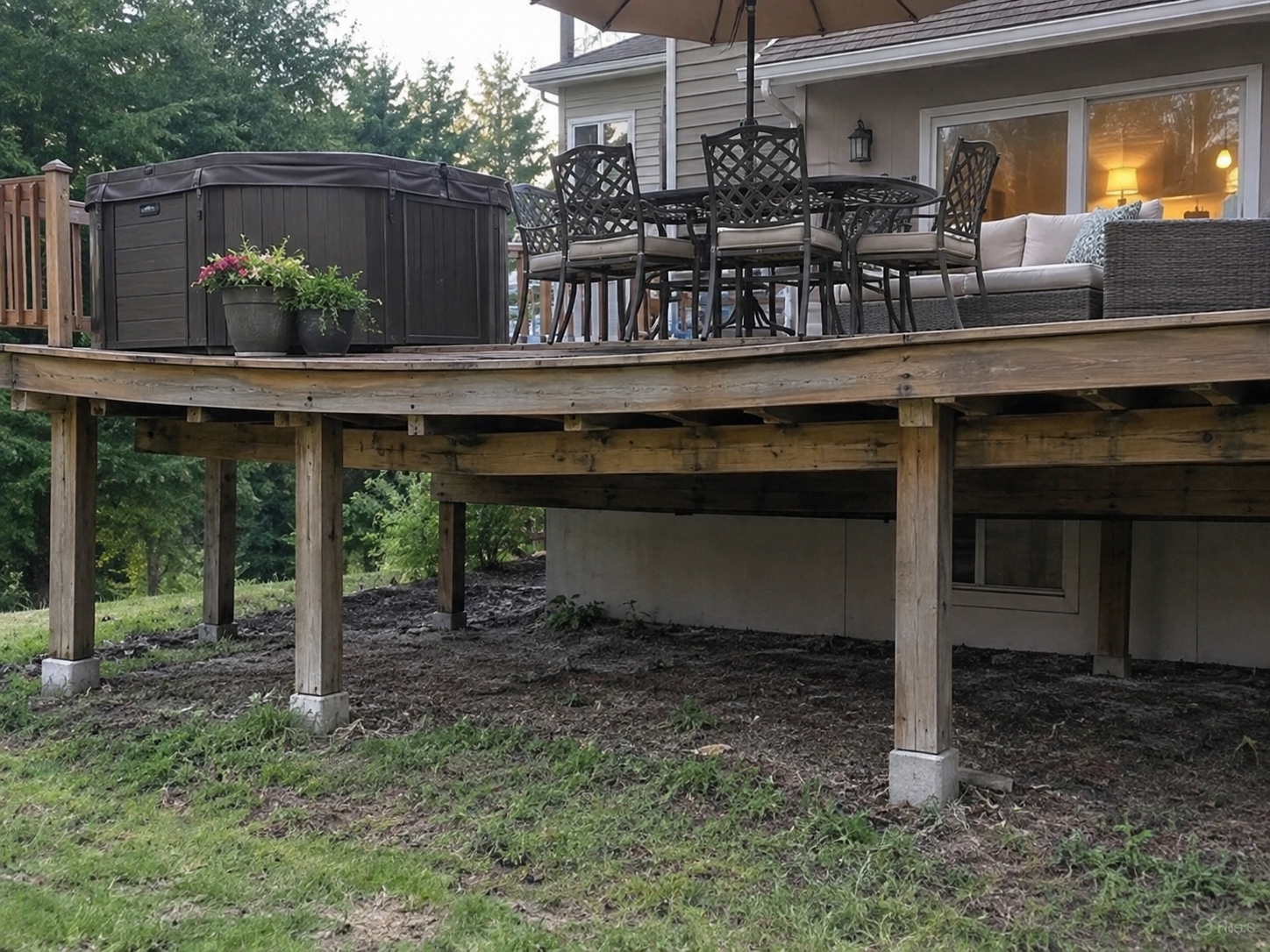
Heavy features can include:
Hot tubs
Large outdoor kitchens
Oversized planters
Fire features
Heavy furniture
Storage equipment
Large gatherings of people
Adding a significant concentrated load to an existing deck without evaluating its structural capacity can increase stresses on joists, beams, posts, connections, and footings.
Before installing unusually heavy features, a structural evaluation can help determine whether the existing deck has adequate capacity or requires reinforcement.
10. Poor Construction or Improper Modifications
Some deck failures can be traced back to deficiencies in the original construction or modifications made later in the structure's life.
Potential issues include undersized structural members, insufficient fastening, improperly installed joist hangers, inadequate footings, poorly executed repairs, or alterations that change how loads move through the structure.
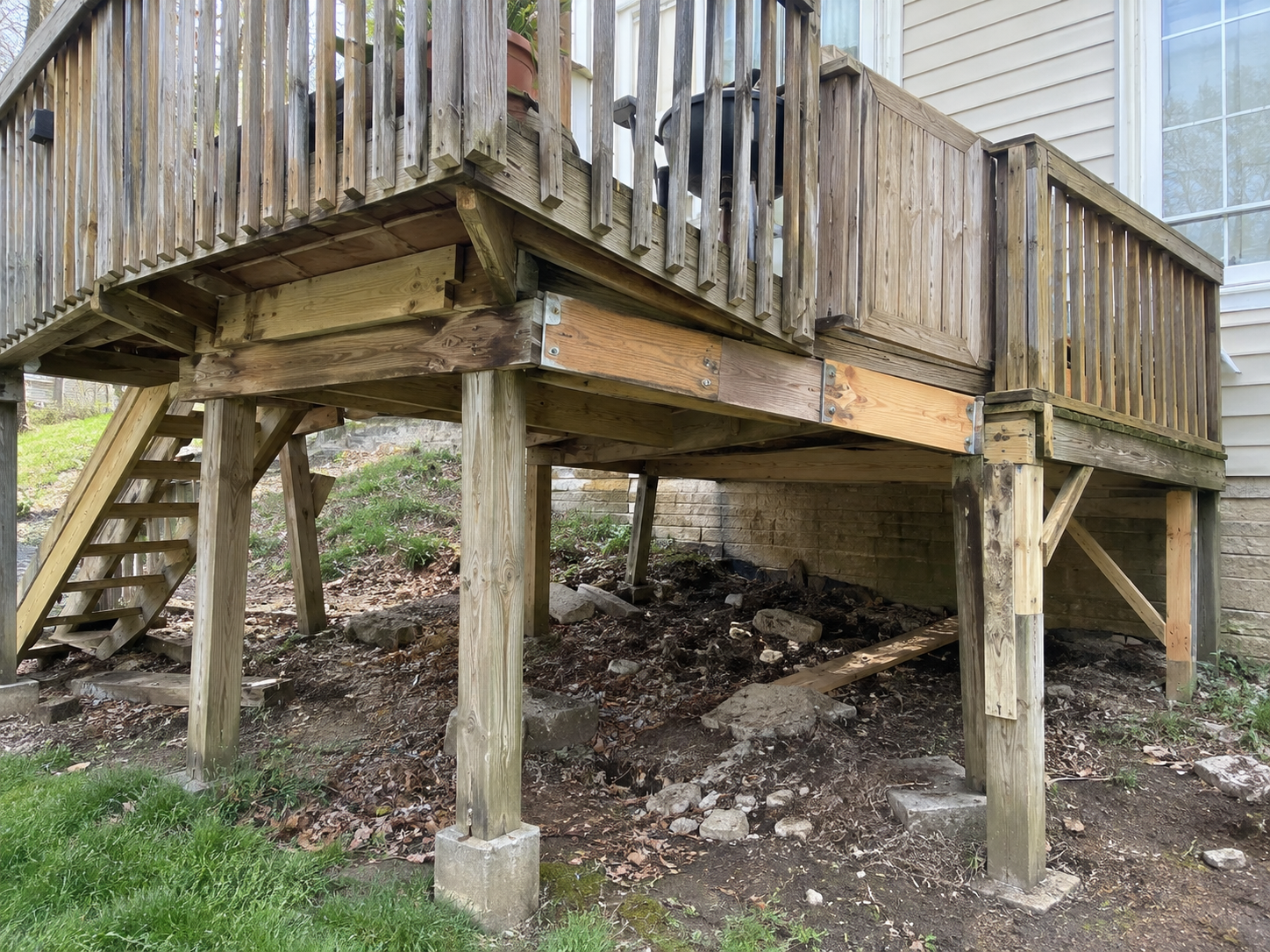
A deck may also have been expanded or modified to accommodate stairs, shade structures, hot tubs, or other features without evaluating whether the existing framing could support those changes.
Professional inspections can help identify these conditions and determine whether further structural analysis or corrective work is appropriate.
Common Warning Signs of a Potential Deck Failure
Some structural problems remain hidden, but many decks provide warning signs before conditions become severe. Property owners should investigate changes instead of assuming they are simply part of normal aging.
Warning signs that may indicate a deck needs professional attention include:
A deck that feels excessively bouncy or unstable
Visible sagging
Leaning posts
Loose railings
Cracked beams or joists
Soft, rotten, or deteriorated wood
Rusted or missing fasteners
Separation between the deck and building
Uneven decking
Loose stairs
Cracked or shifting footings
Water damage around structural connections
Unusual creaking or movement
Significant termite or pest damage
A visible problem does not necessarily mean a complete deck failure is imminent, but it does provide a reason to investigate the condition further.
How Regular Deck Inspections Help Prevent Deck Failures
The purpose of a deck inspection is not simply to identify cosmetic wear. A thorough inspection focuses on the components responsible for supporting loads and maintaining safe access to the structure.
Regular inspections can help identify early-stage problems such as corrosion, moisture intrusion, weakened connections, deteriorating lumber, loose railings, or foundation movement. Addressing these issues early can prevent them from progressing into larger structural deficiencies.
Inspections can also help property owners prioritize maintenance. Instead of waiting until extensive repairs are necessary, owners can make informed decisions about repairing individual components, improving drainage, replacing deteriorated hardware, strengthening connections, or obtaining further structural analysis.
For multifamily and commercial properties, systematic inspections are particularly important because balconies, decks, stairs, and exterior elevated structures may be used by many occupants throughout the year.
What Should a Professional Deck Inspection Evaluate?
The exact scope will depend on the design and condition of the structure, but a professional deck inspection may evaluate several important areas.
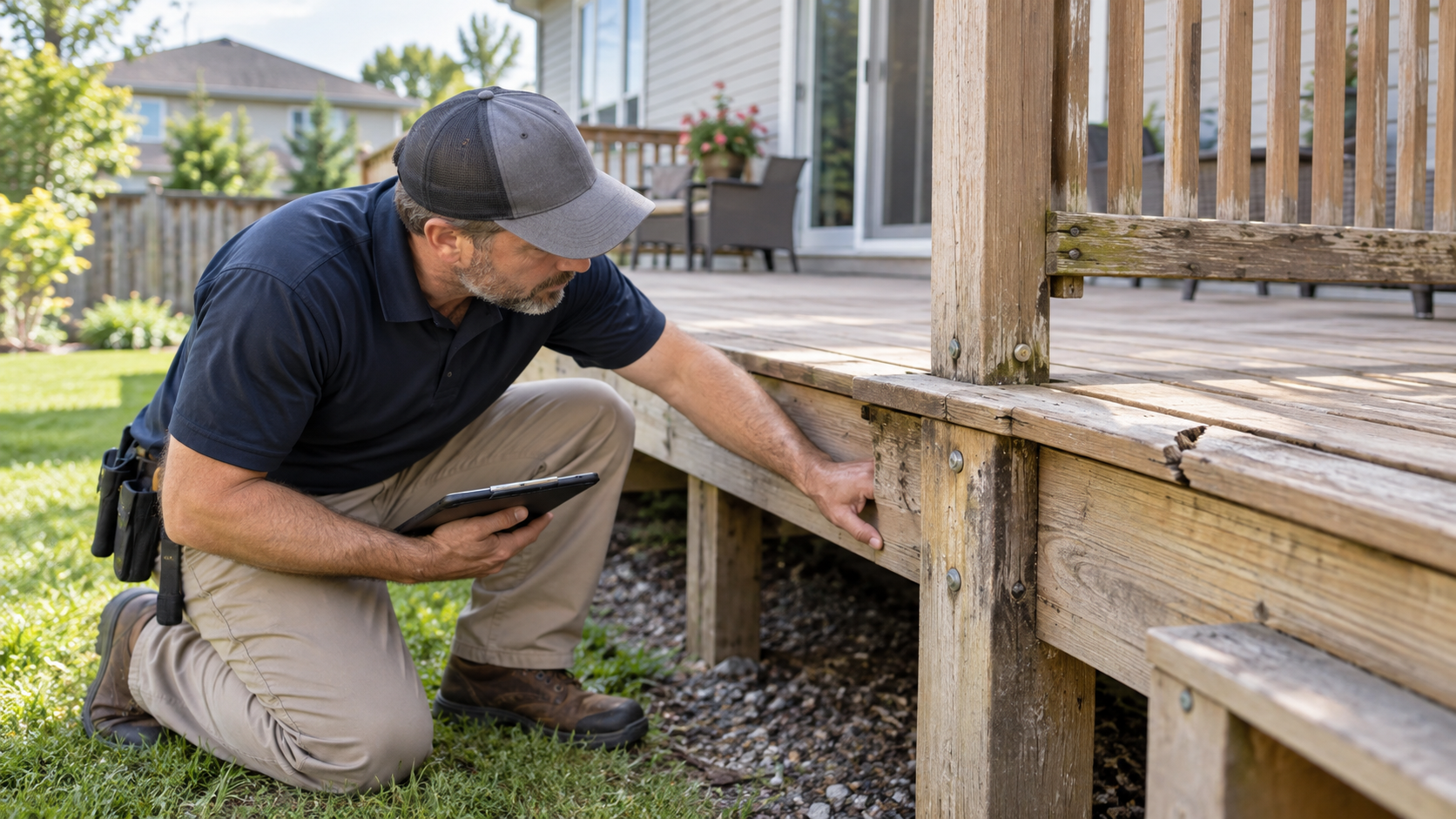
Structural framing
Joists, beams, posts, and other framing members can be reviewed for deterioration, excessive deflection, cracking, improper modifications, or other structural concerns.
Connections and hardware
Inspectors can examine ledger connections, joist hangers, bolts, brackets, fasteners, and other load-transfer points for corrosion, looseness, deterioration, or installation concerns.
Moisture and wood deterioration
Areas vulnerable to trapped moisture can be evaluated for signs of rot or decay, particularly around connections and locations where water may accumulate.
Posts, footings, and supports
The support system can be examined for movement, settlement, deterioration, or other visible conditions that could affect stability.
Railings and stairs
Guardrails, handrails, stairs, landings, and their connections should be reviewed for looseness, deterioration, or instability.
Overall deck movement and condition
Visible sagging, leaning, separation, or unusual movement can help identify areas that require closer investigation.
When significant deficiencies are found, additional structural evaluation may be recommended to determine an appropriate repair or reinforcement strategy.
How Often Should You Inspect a Deck?
Property owners should routinely look over their decks for obvious changes and arrange a professional evaluation when deterioration, unusual movement, or structural concerns appear.
The appropriate inspection frequency can vary based on factors such as:
Age of the deck
Construction materials
Exposure to rain and moisture
Frequency of use
Previous repairs
Building occupancy
Proximity to coastal environments
Visible deterioration
Changes or additions to the deck
Older decks and structures with a history of moisture exposure may warrant particularly close attention.
A professional inspection should also be considered before purchasing a property with an older deck, after significant structural modifications, or before adding a heavy feature such as a hot tub.
Professional Deck Inspections From The Sterling Watson Collective
Here at The Sterling Watson Collective, we provide full-service structural engineering resources throughout Southern California from our Los Angeles base. Our multidisciplinary capabilities include structural engineering, architecture, land development, construction-related services, drafting, general contracting, skilled labor resources, and additional support for residential, commercial, industrial, multifamily, and renovation projects. Our approach combines engineering expertise with practical construction knowledge so that structural concerns can be evaluated within the broader context of the property and project.
Our deck inspection services can help property owners identify structural concerns before deterioration contributes to a potentially serious deck failure. Whether you manage a multifamily property, own a commercial building, oversee an HOA, or are concerned about the deck at your home, we can evaluate the condition of important structural components and help determine whether repairs, reinforcement, maintenance, or additional engineering work should be considered.
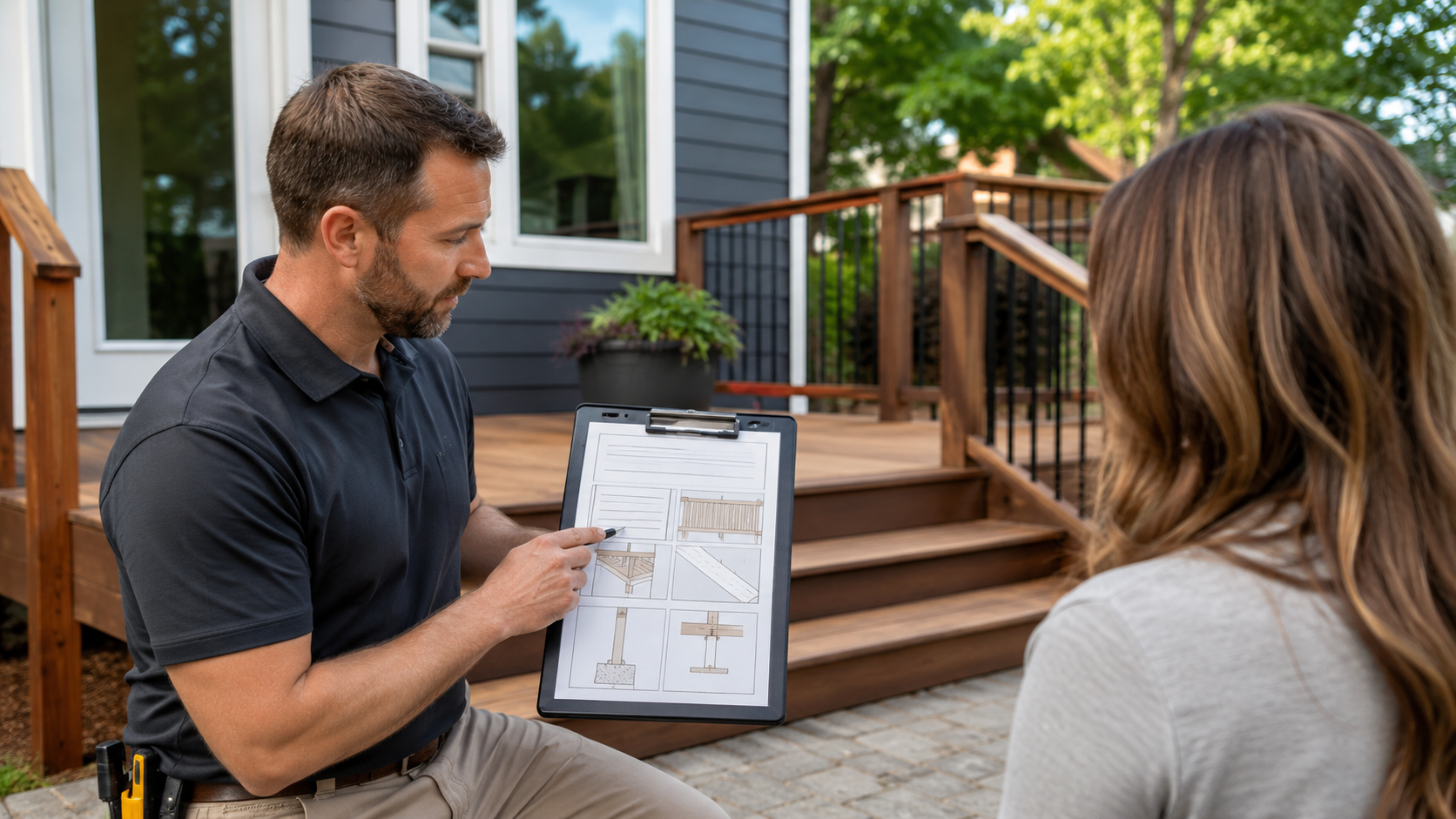
Schedule a Professional Deck Inspection Before Problems Become Serious
Deck failures can result from years of hidden moisture damage, deteriorating connections, weakened framing, unstable supports, excessive loading, or a combination of several smaller deficiencies. Waiting until a deck visibly sags, shifts, or becomes unstable can allow relatively manageable concerns to progress into more complicated structural problems.
If you are a residential homeowner, HOA manager, multifamily property representative, or commercial property owner in Southern California, contact us here at The Sterling Watson Collective to schedule a professional deck inspection. We can help you assess the condition of your deck, identify potential structural concerns, and determine the appropriate next steps for maintaining a safer and more reliable structure. Schedule your deck inspection today and address potential problems before they develop into a serious deck failure.
FAQs
-
Common causes of deck failures include rotted wood, loose or corroded fasteners, inadequate ledger connections, damaged support posts, failing footings, and poor construction. Excessive loads and long-term moisture exposure can also contribute to a serious deck failure.
-
Warning signs can include sagging, excessive movement, leaning posts, loose railings, cracked beams, soft or rotted wood, rusted hardware, and separation between the deck and the building. Any noticeable change in the deck's stability or structural condition should be evaluated promptly.
-
Decks should be visually checked regularly and professionally inspected whenever signs of deterioration, movement, or structural damage appear. Older decks, heavily used decks, and structures exposed to frequent moisture may require more frequent professional evaluation.
-
Homeowners, HOA managers, and commercial property owners can contact The Sterling Watson Collective for professional deck inspection services throughout Southern California. Our structural engineering resources can help identify potential safety concerns, evaluate structural conditions, and recommend appropriate next steps.