Termite Deck Damage: How to Spot It, Fix It, and Keep Your Deck Safe in Los Angeles
Key Takeaways
Hollow sounding wood, mud tubes, and small holes are the most common signs of termite deck damage in Los Angeles decks
A deck can become structurally unsafe even when surface boards look normal, especially in older LA decks built between the 1980s and 2010s
Early detection through regular inspections can prevent full deck replacement and protect your home’s foundation from spreading infestations
Dry rot damage and termite damage often appear together and both must be addressed for a safe deck
The Sterling-Watson Collective offers structural inspections, repair design, and coordination with pest control to restore damaged wood decks throughout Los Angeles County
Introduction: Why Termite Deck Damage Is a Serious 2026 Issue in Los Angeles
Los Angeles’s warm climate combined with irrigation systems and coastal moisture creates ideal conditions for termite activity year-round. In climates like California’s, termite colonies can expand continuously, making early detection essential. Termites can cause extensive damage to wooden structures before any visible signs appear, hollowing out joists, beams, and deck boards while the surface looks perfectly fine.
Decks built before 2005 often used less-protected lumber and construction details now known to be vulnerable. Many homeowners first notice hollow sounding wood, dry rot, or small holes without knowing whether termites, fungus, or simple weathering is responsible. This guide will help you recognize common signs, distinguish termites from dry rot, and know when to call pest control and a structural engineer.
Common Signs of Termite Damage in Decks
Termite activity often begins on the underside of decks and in shaded, damp corners where owners rarely look. The following visual and sound clues take just minutes to check and can reveal a termite infestation before it becomes catastrophic.

Hollow Sounding or Spongy Deck Boards
When inspecting your deck, tap on the wooden planks—if they sound hollow, it may indicate that termites have eaten through the internal structure, leaving only a thin outer layer. Use a screwdriver handle or your knuckles and listen for drum-like sounds versus solid thuds.
Loose boards feel unstable, bouncy, or springy underfoot, indicating compromised structural integrity due to termite activity. Focus on traffic zones near grills, hose bibs, planters, and hot tubs where moisture is common. In many Los Angeles inspections, our engineers find 30–50% cross-section loss on joists before homeowners notice deflection.
Mud Tubes on Posts, Footings, and Foundation
Mud tubes are pencil-width tunnels made from dirt and saliva, a clear sign that subterranean termites are traveling from their underground colonies to wooden structures. Look for these narrow tunnels running up concrete footings, wood posts, and foundation walls in shaded areas.
Check under stairs, at the base of posts, and along the underside of the ledger where it meets stucco or siding. Scraping away a small section and seeing it rebuilt within days strongly indicates an active colony. Photograph mud tubes with date stamps to share with pest control and structural inspectors.
Small Holes, Frass, and Sawdust-Like Debris
Small exit holes in wood surfaces, often 1–2 mm round, accompanied by powdery termite droppings known as frass, indicate drywood termites have been burrowing through the wood. Frass consists of tiny six-sided fecal pellets that resemble sawdust or sand.
Look for these piles on railings, fascia boards, and deck surfaces. Carpenter ants leave rougher, mixed debris, so professional identification helps when uncertain. Clean any debris and recheck within a week—new frass confirms active infestation.
Warping, Sagging, and Cracked or Splintering Wood
Warped, buckling, or sagging wood signals termite damage because the structural integrity becomes compromised when termites feed. When joists and beams weaken, the deck surface may sag between posts or bounce noticeably when walked on.
Bubbling paint or finish on wood surfaces can indicate underlying termite damage due to moisture from their activity. Moisture-rich environments created by termites lead to premature blistering, bubbling, or peeling of paint or sealant. Any visible sagging means the deck may be unsafe for gatherings until inspected.
Clicking or Rustling Noises Inside Deck Wood
Soldier termites sometimes produce faint clicking or tapping sounds when disturbed, often noticeable at night when the yard is quiet. Place an ear against suspect posts or beams if other signs are already present.
Absence of noise doesn’t rule out termites—sounds are just one confirming clue. Noises combined with visible evidence warrant prompt pest control treatment and structural inspection.
Termites vs. Dry Rot vs. Simple Weathering: What’s Really Damaging Your Deck?
Many LA homeowners are told damage is “just dry rot” when both termite and fungal damage are actually present. Understanding the difference drives the right repair strategy.
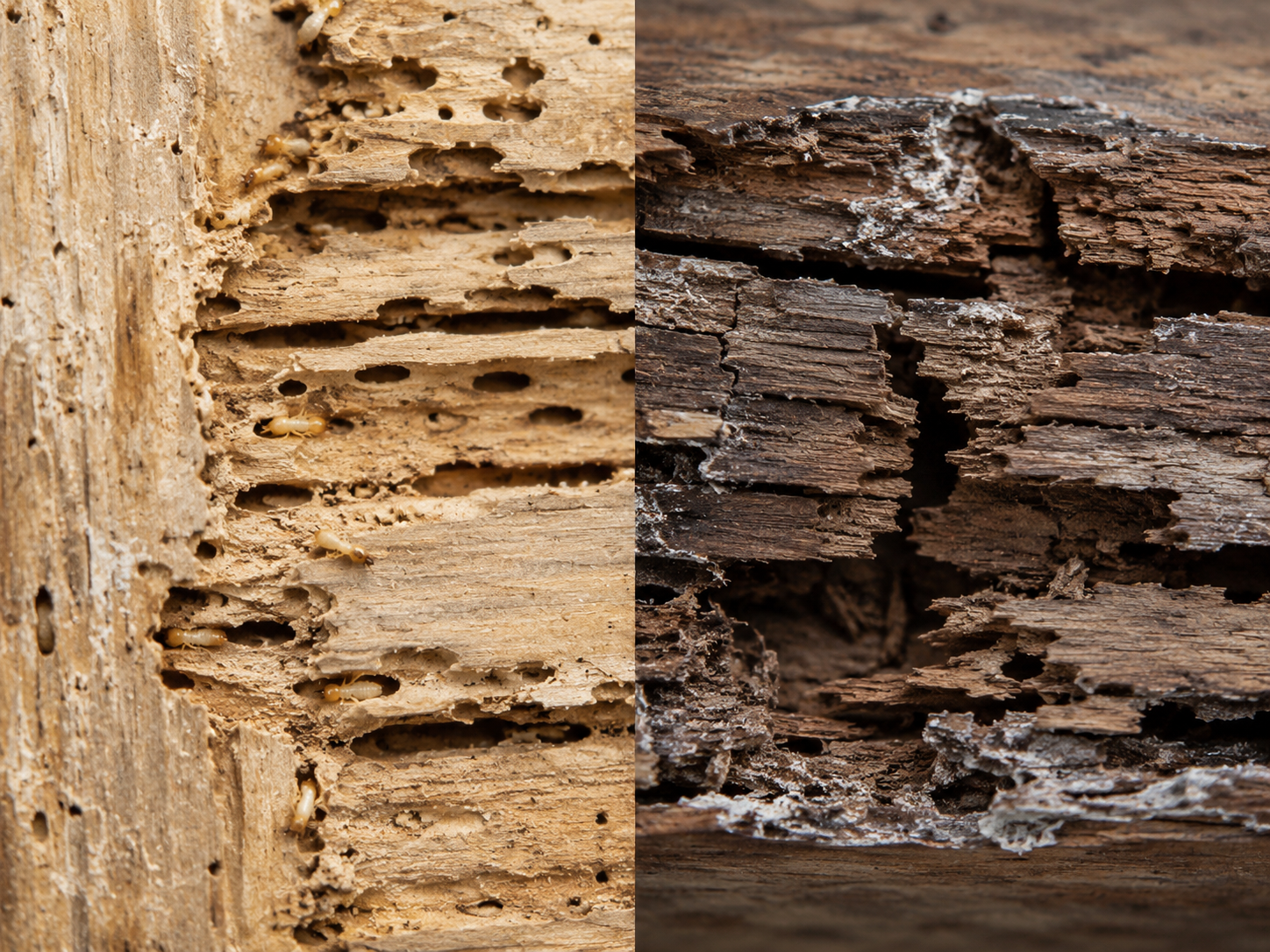
How Dry Rot and Moisture Damage Look and Feel
Dry rot damage appears as wood that is crumbly, stringy, or cube-cracked, typically in consistently damp spots near sprinklers, planters, or downspouts. Affected wood often shows dark staining, peeling coatings, and feels soggy before drying and turning brittle.
Dry rot damage is often shallow or localized to exposed surfaces, versus the internal tunneled pattern of termite feeding. Addressing moisture sources—leaks, poor flashing, clogged gutters—prevents dry rot from returning after repairs.
Typical Patterns of Termite Damage in Deck Wood
Termite galleries often follow the natural grain of the wood, creating a characteristic layered or shelved appearance. Probing reveals soft voids under seemingly intact paint, with damaged wood collapsing into channels rather than flaking on the surface.
Subterranean termites attack near soil contact and ledger connections, while drywood termites may appear higher in railings and trim. Many older Los Angeles decks show both termite damage and dry rot together, requiring combined treatment and structural replacement.
When the Deck May Already Be Unsafe
Red flags suggesting a deck unsafe condition include:
Noticeable bounce near the middle
Visible sagging at the ledger
Loose railings
Posts with visible mud tubes and soft bases
Termite damage on decks often goes unnoticed until the structure is severely weakened, as these pests feed on the inside while leaving the outer shell intact. Keep groups off suspect areas and avoid heavy loads until a structural engineer evaluates.
How to Inspect Your Deck for Termite and Dry Rot Damage (Owner Checklist)
While professional inspections are ideal, a careful homeowner can perform a 15–30 minute visual check. Regular inspections for mud tubes and hollow-sounding timber beneath decks should be performed every six months to catch termite infestations early.
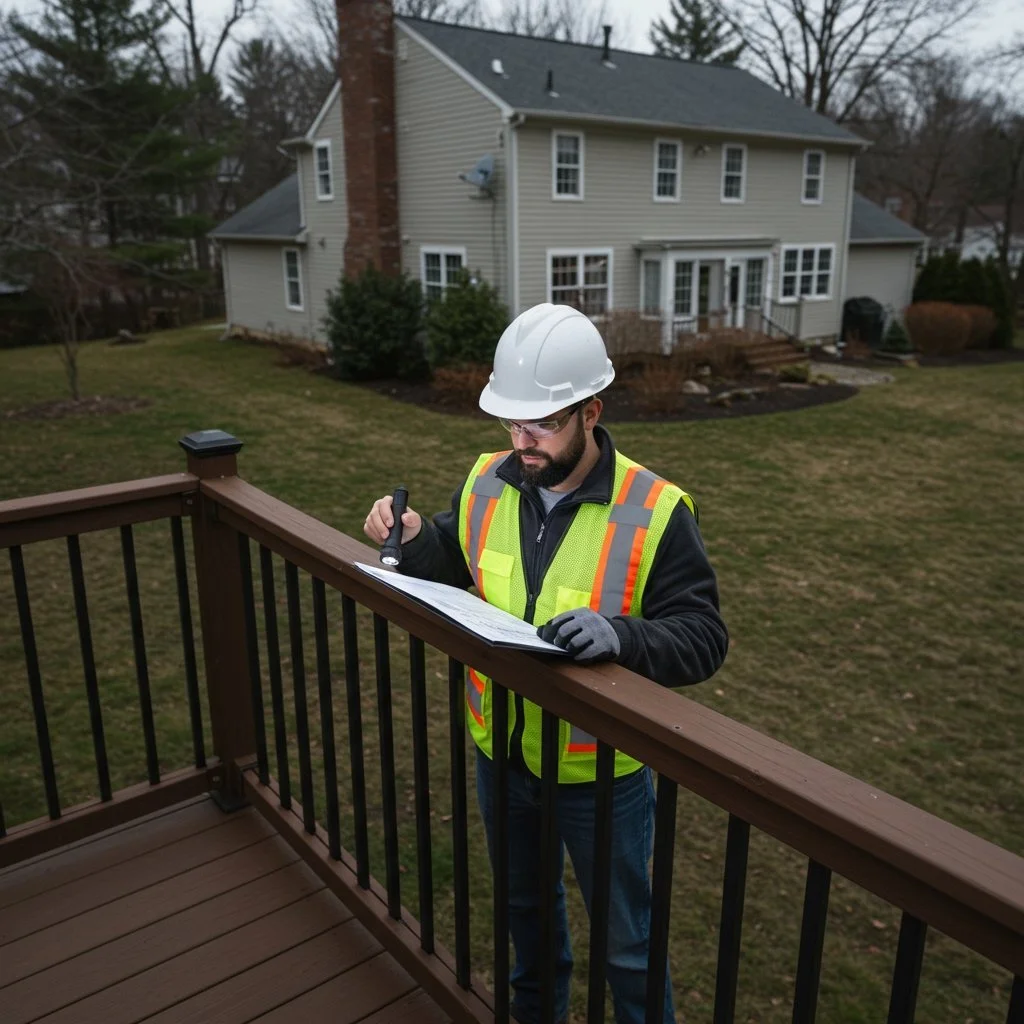
Step 1: Scan Deck Surface, Deck Boards, and Railings
Walk the full deck surface, feeling for soft, springy, or uneven deck boards. Tap boards and rail posts, listening for hollow sounding wood. Note areas that crumble or dent easily with gentle pressure.
Inspect railings and stair handrails for looseness, cracking, small holes, or frass accumulation. Mark suspicious spots with painter’s tape to revisit with a professional inspector.
Step 2: Check the Underside, Joists, and Beams
To inspect your deck for termites, start by examining the underside for mud tubes, hollow wood, or signs of frass, paying close attention to posts, beams, and deck joists in contact with soil. Use a flathead screwdriver to gently probe areas of damaged wood—if the screwdriver sinks easily or wood crumbles with pressure, it indicates termite damage.
Look for channeled or ribbed wood surfaces and members with irregular notching. Piles of frass on lower-level beams reveal drywood termite activity above.
Step 3: Inspect Posts, Footings, and Nearby Soil
Study the base of each post, verifying wood isn’t buried in soil and that metal post bases and concrete footings are visible and sound. Look for mud tubes on post sides, concrete piers, and adjacent foundation walls.
Check soil and mulch around posts for excess moisture and standing water. Excessive mulch can attract termites by holding moisture. Note any settlement, tilting posts, or cracked footings for structural review.
Step 4: Examine the Deck-to-House Connection (Ledger Area)
The ledger board is critical and a common site of both termite and dry rot damage due to poor flashing and chronic moisture. Check for rusted lag bolts, gaps between ledger and siding, dark stains, or soft spots.
Inside the house, cracks in drywall or floor separations near the deck door can hint at hidden ledger issues. Don’t remove siding yourself—record concerns and schedule professional inspection.
Preventing Termite and Dry Rot Damage in New and Existing Decks
Prevention in Los Angeles combines material selection, detailing that keeps wood dry, and regular inspections.
Choose Treated, Termite-Resistant, or Composite Materials
Using pressure treated wood or termite-resistant materials like cedar or composite decking can significantly reduce risk. Recommend pressure-treated lumber rated for ground contact (AWPA UC4B) for posts, beams, and joists. Chemical treatments such as borate-based sprays can effectively poison termites that attempt to feed on treated lumber.
Post bases, connectors, and flashing should be galvanized or stainless steel to withstand coastal and irrigation moisture.
Eliminate Wood-to-Soil Contact and Improve Drainage
To prevent termite infestations, keep wood components elevated above ground, ideally using concrete footings for support posts. To prevent termites from returning, maintain proper drainage and keep wood-to-soil contact at a minimum, raising wooden posts on concrete piers.
Slope surrounding soil away from posts. Address common LA issues like planter boxes and sprinkler overspray constantly wetting lower boards. Ensuring proper drainage prevents the conditions termites need to thrive.
Control Moisture and Ventilation Around the Deck
Both termites and fungi thrive where wood stays damp. Use vented lattice instead of solid skirting so under-deck spaces dry after rain. Trim dense shrubs that block ventilation.
Sealing cracks and gaps in your deck with a weather-resistant sealant helps prevent termites from entering. After treatment, use a water-soluble chemical to create a barrier preventing future termite infestations.
Regular Inspections and Maintenance Schedule
Regular inspections of your deck, ideally once a year, can help catch potential termite problems before they escalate. Perform basic checks twice yearly and schedule professional termite inspection annually, even without obvious damage.
Annual maintenance includes washing debris from deck gaps, touching up sealants, and tightening loose connectors. Keep written records of inspections and treatments for future buyers.
From Termite Damage to Repair Plan: Safety, Costs, and What Happens Next
Once damage is discovered, homeowners ask: Is the deck unsafe? What will repairs involve? Early detection is crucial because it allows for targeted treatment and partial repairs, potentially saving homeowners from costly full reconstructions that can range from $15,000 to $40,000.
Coordinating Pest Control and Structural Evaluation
First have licensed pest control confirm species and treat active termites. Then bring in a structural engineer to assess damage. Engineers prefer post-treatment evaluation so new wood isn’t attacked immediately.
In severe cases, temporary shoring or partial closures keep the deck unused until repairs complete. Keep copies of termite reports and engineering letters for permitting and resale disclosures.
Repairing, Retrofitting, or Rebuilding a Termite-Damaged Deck
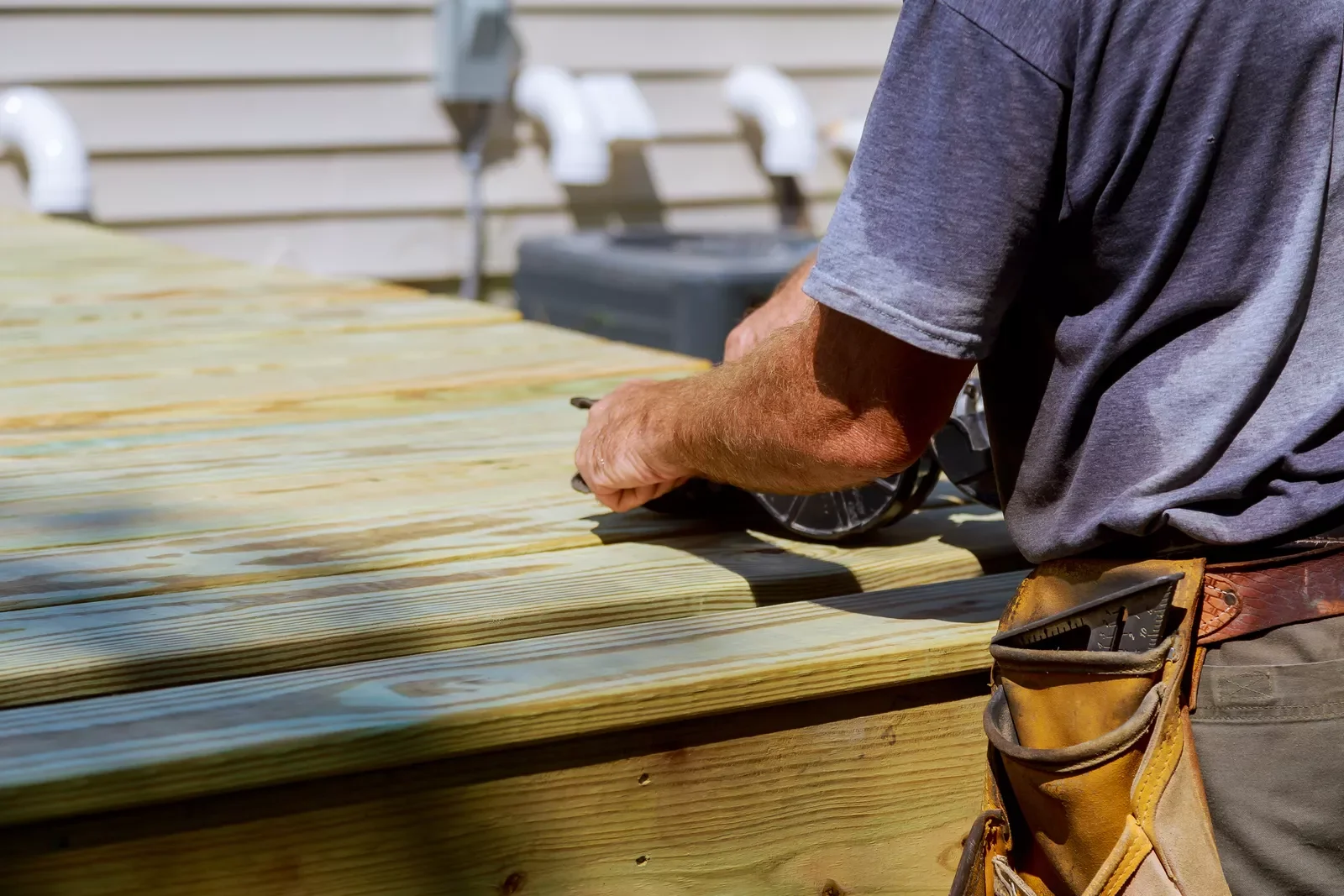
When repairing a deck with termite damage, replace all the wood termites were feeding on to eliminate their scent and prevent future infestations. Options include replacing individual deck boards and joists while reinforcing adjacent members.
For decks with significant termite damage, a full replacement may be more cost-effective than partial repairs, especially if the deck is over 20 years old. Retrofit strategies include adding beams, upgrading connectors, and improving ledger flashing to meet current California Building Code.
How to Prevent New Damage After Repairs
Completed repairs should include termite-resistant materials, improved flashing, and removal of moisture sources. Consider ongoing termite monitoring programs with pest control providers.
Adopt a simple annual checklist: visual inspection, cleaning debris, verifying clearances, checking for mud tubes or frass. Integrating deck work with broader property upgrades like seismic retrofit or ADU construction improves long-term resilience.
How The Sterling-Watson Collective Helps Los Angeles Owners with Termite Deck Damage
The Sterling-Watson Collective is a Los Angeles-based structural engineering and design-build firm focused on safe, practical, code-compliant deck solutions. We coordinate with licensed termite companies as part of structural repair and renovation projects throughout Los Angeles County.
Deck and Balcony Inspections, Structural Evaluation, and Reporting
Our structural engineers evaluate joists, beams, ledgers, posts, and connections for termite damage, dry rot, and general deterioration. Clients receive clear, prioritized written reports suitable for city officials, HOAs, or real estate transactions outlining current safety status and recommended repairs.
Repair Design, Permitting, and Construction Support
We prepare engineered plans to replace damaged wood, upgrade connections, and improve moisture and termite resistance. Our team handles Los Angeles City and County permitting through final sign-off and can manage construction including demolition and installation of new framing.

FAQs
-
Termites in a deck don’t automatically mean the entire house is infested, but they can spread to nearby framing. Have a full-property termite inspection performed, especially at the deck-to-house connection. Even if the main house is clear, the deck still needs proper structural evaluation.
-
Most standard California homeowner policies treat termite damage as a maintenance issue and don’t cover repairs. Confirm with your specific insurer. Engineering reports from firms like The Sterling-Watson Collective help document damage if any coverage applies.
-
While a deck rarely collapses overnight, termites and rot continue weakening wood. Decks showing sagging, loose rails, or soft joists should be kept lightly loaded or off-limits until inspected. Coordinating pest control and structural repairs within weeks to months is typical.
-
Selective repair works when damage is localized to a few boards or a single post. When damage affects the ledger, primary beams, or large percentage of framing, full replacement may be more economical. Get a structural opinion comparing options, especially for decks over 20 years old.
-
DIY products may help with very minor issues but are rarely sufficient for structural infestations. Improper treatment lets termites continue eating hidden members, keeping the deck unsafe. Use licensed pest control for confirmed infestations, then coordinate with structural professionals for lasting repairs.