Comparing Dry Rot vs Termites: How to Tell What's Damaging Your Deck
Wood decks are constantly exposed to moisture, changing temperatures, insects, and everyday wear. When boards begin to soften, crack, sag, or crumble, determining the cause is not always straightforward. Two of the most serious possibilities are fungal wood decay and termite activity, both of which can gradually weaken decking, railings, posts, beams, and connections.
Understanding the differences between dry rot vs termites can help homeowners and HOA managers recognize warning signs and take the right next step. Although the damage may initially look similar, dry rot and termite infestations develop for different reasons and require different corrective measures.
A professional deck inspection is often the safest way to determine the cause, identify the extent of deterioration, and evaluate whether the affected components remain structurally sound.
What Is Dry Rot in a Wood Deck?
Dry rot is a form of fungal wood decay. Despite its name, it does not develop in completely dry wood. Fungi require moisture to grow and break down the structural components of wood, gradually reducing its strength.
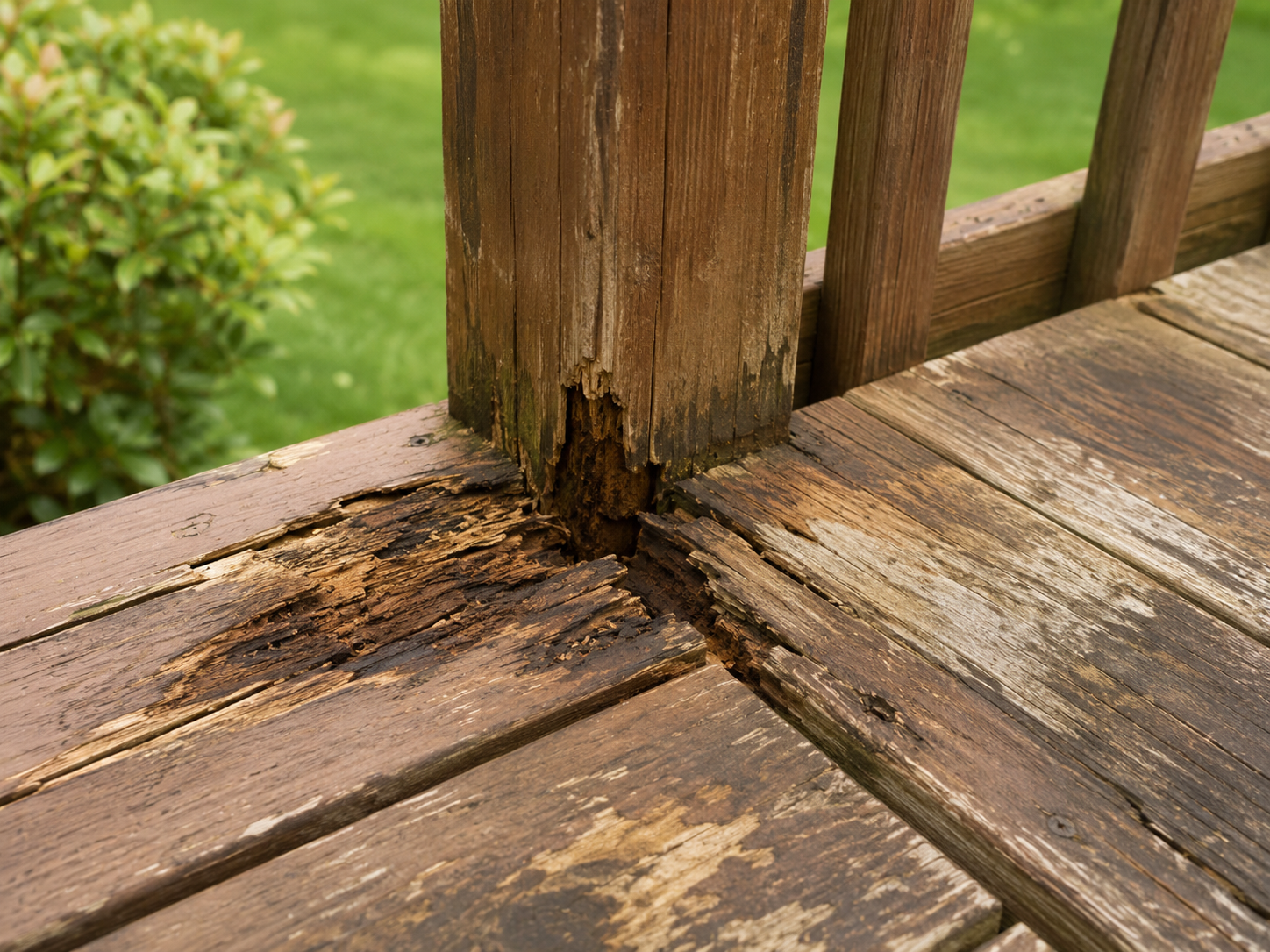
On a deck, fungal decay commonly develops where water repeatedly collects or where wooden components cannot dry properly. Vulnerable areas may include:
Deck boards with peeling or failed coatings
Joists beneath poorly drained decking
Ledger boards connected to exterior walls
Posts installed close to soil or landscaping
Beam-to-post connections
Stair stringers and landings
Areas beneath planters, rugs, or outdoor furniture
Rail posts where water enters around fasteners
Connections affected by leaking flashing
As decay progresses, the wood may become soft, brittle, stringy, cracked, or crumbly. Brown rot, which is frequently associated with the general term “dry rot,” can cause wood to shrink and break into block-like sections. Other forms of decay may leave wood fibrous or bleached.
Wood-decay fungi can substantially reduce the strength of affected material, even before the deterioration becomes obvious from the surface.
What Does Termite Damage Look Like on a Deck?
Termites are insects that consume cellulose, a primary component of wood. California properties may encounter subterranean, drywood, or dampwood termites, and each type can affect wooden structures differently.
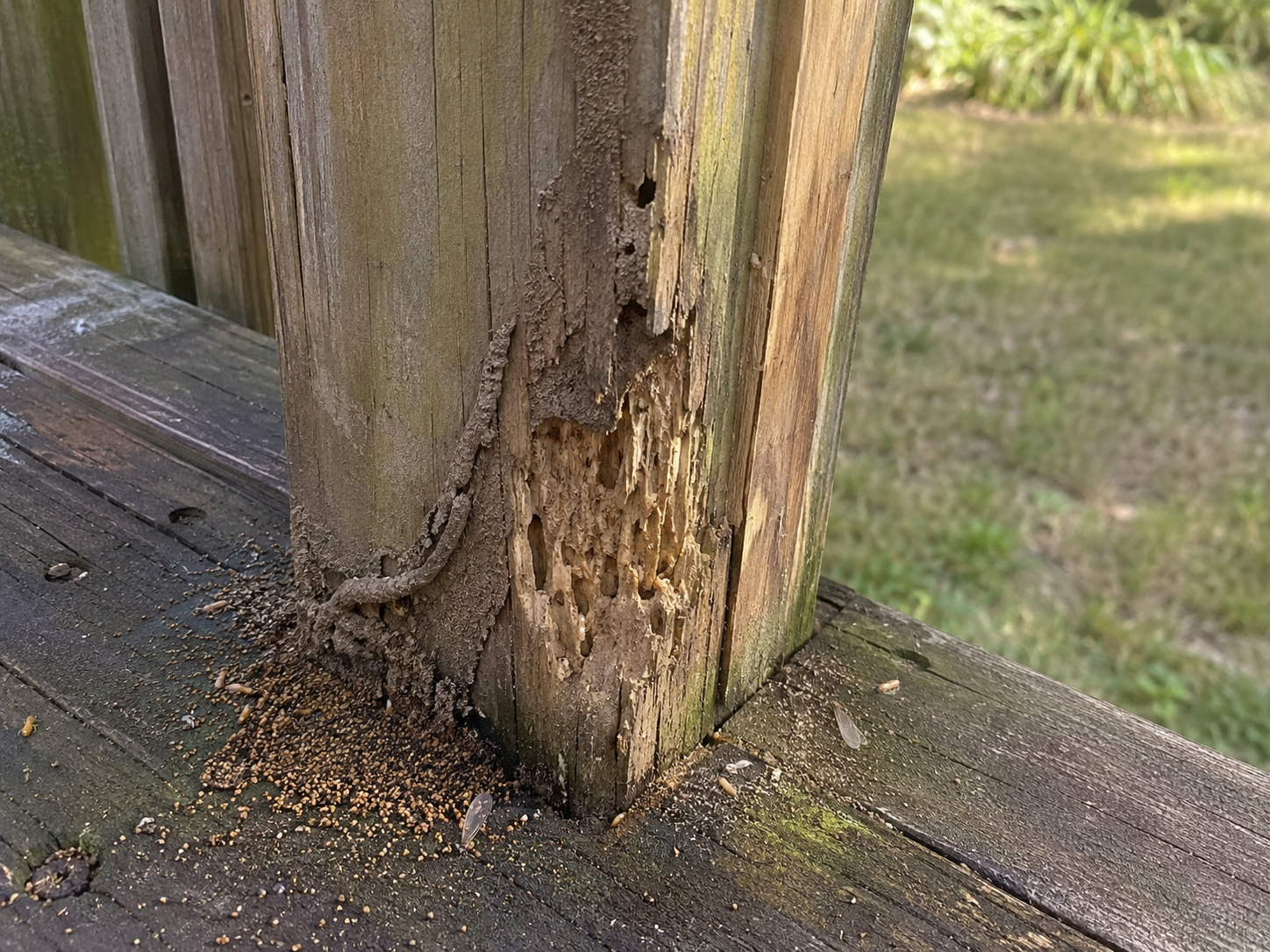
Termites often work inside wooden components, allowing the exterior surface to appear relatively intact while internal material is being consumed. This hidden pattern is one reason termite damage can remain unnoticed until boards sound hollow, fasteners loosen, or structural components begin to deform.
Possible signs of termite activity around a deck include:
Hollow-sounding boards, beams, or posts
Mud tubes on foundations, walls, posts, or concrete supports
Small holes in exposed wood
Pellet-like droppings, also known as frass
Discarded wings near doors, windows, deck edges, or light fixtures
Wood that breaks open to reveal channels or galleries
Blistered, rippled, or unusually thin wood surfaces
Sagging boards or weakened railing components
Live termites or winged swarmers
Subterranean termites typically travel between soil and wood through protected mud tubes. Drywood termites can live within relatively dry wooden components and may leave piles of small, pellet-shaped droppings near the damaged area.
The Environmental Protection Agency recommends professional assistance when termite activity is suspected because treatment depends on the termite species, infestation location, and extent of activity.
Dry Rot vs Termites: Key Differences at a Glance
The main difference between dry rot vs termite damage is the source of deterioration. Dry rot is caused by fungal growth supported by excess moisture, while termites physically consume or hollow out wood.
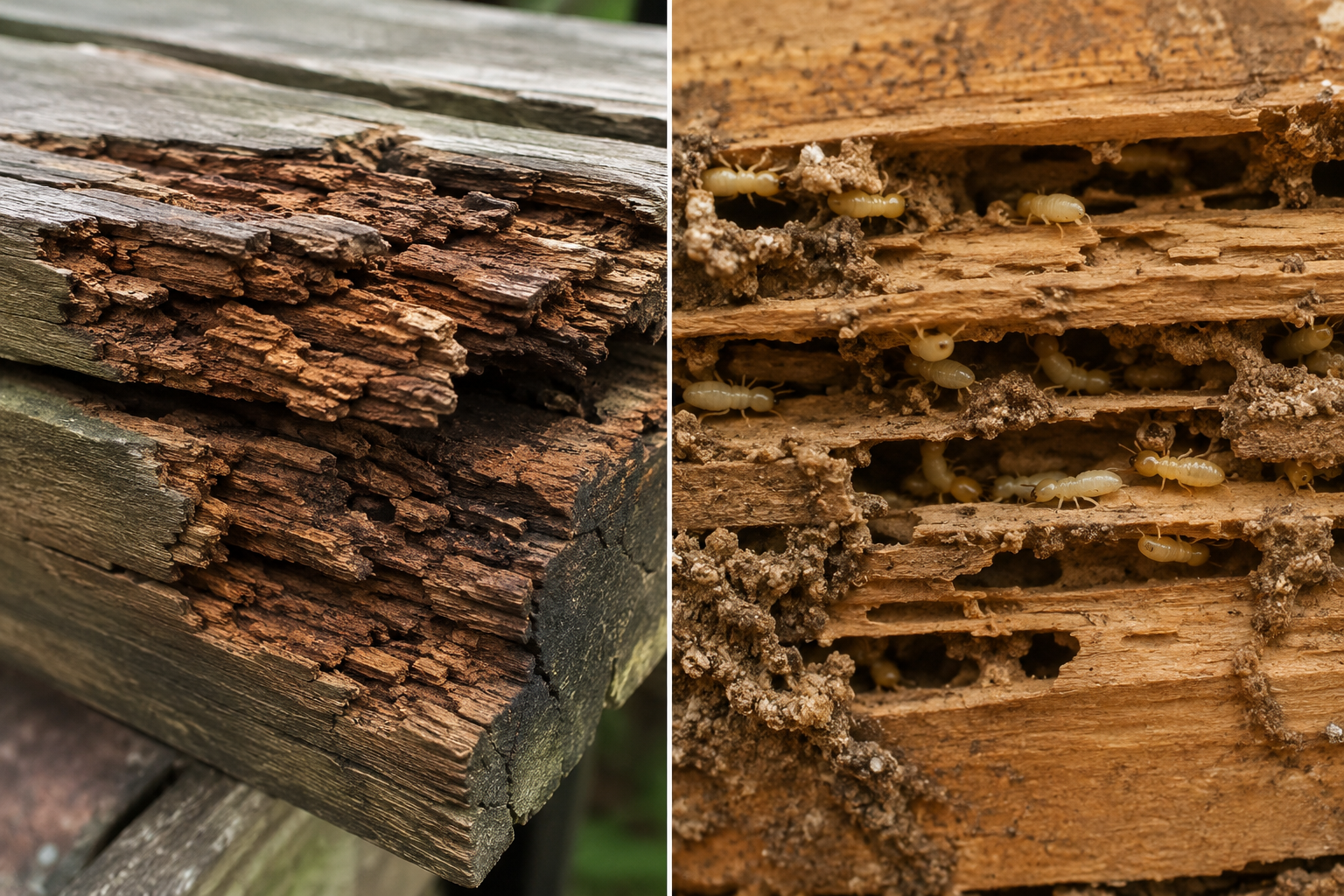
The following table compares common characteristics.
| Comparison Factor | Dry Rot or Fungal Decay | Termite Damage |
|---|---|---|
| Primary Cause | Wood-decay fungi and prolonged moisture exposure | Wood-eating insects |
| Typical Wood Texture | Soft, spongy, brittle, stringy, or crumbly | Hollow, thin-shelled, layered, or tunneled |
| Common Damage Pattern | Cubical cracking, discoloration, fibers, or general deterioration | Internal galleries, channels, mud-lined tunnels, or hollow spaces |
| Moisture Relationship | Requires moisture conditions that support fungal growth | Moisture may increase risk, although some termite species infest drier wood |
| Surface Appearance | Often visibly stained, cracked, warped, or deteriorated | Surface may initially remain intact despite hidden internal damage |
| Additional Evidence | Fungal growth, musty odors, damp areas, failed flashing, or water stains | Mud tubes, frass, discarded wings, swarmers, or live insects |
| Common Deck Locations | Ledger boards, joists, posts, stairs, fastener penetrations, and poorly drained areas | Posts, framing, railings, stairs, deck-to-building connections, and wood near soil |
| Primary Corrective Response | Stop the moisture source and repair or replace decayed material | Identify and treat the infestation, then assess and repair damaged wood |
| Structural Concern | Loss of wood density and load-carrying strength | Loss of internal wood material and connection capacity |
How Dry Rot vs Termite Damage Feels Different
Texture can provide useful clues, but it should not be treated as a final diagnosis.
Wood affected by fungal decay may feel soft, damp, spongy, brittle, or unusually lightweight. A screwdriver or probe may sink into the wood gradually, causing the material to crumble or separate into small blocks or fibers.
Termite-damaged wood may feel firm at the surface but suddenly collapse when pressure is applied. The remaining surface can act like a thin shell covering hollow channels below. When the wood is opened, the damage may follow the grain and reveal layered tunnels.
These differences can help guide an initial assessment, but aggressively probing a deck can worsen an already weakened component. Homeowners and property managers should avoid cutting into load-bearing beams, posts, joists, railings, stair stringers, or ledger boards without professional guidance.
Comparing the Visual Signs of Termites vs Dry Rot
When evaluating termites vs dry rot, look at the surrounding conditions as well as the damaged wood itself.
Visual Signs More Consistent With Dry Rot
Fungal decay is more likely when the deck shows:
Dark, brown, gray, or bleached discoloration
Cracks that divide the wood into block-like sections
Soft or stringy surface fibers
Persistent dampness
Fungal growth or unusual surface residue
A musty odor
Warping near water-damaged areas
Deterioration surrounding nails, bolts, or screws
Failed or missing flashing
Water stains below doors, walls, or deck transitions
The damage is often concentrated near an identifiable moisture source. However, water can travel behind finishes, through wall assemblies, or along fasteners, so the visible defect may not reveal the full extent of the problem.
Visual Signs More Consistent With Termites
Termite activity is more likely when you find:
Narrow mud tubes
Small piles of uniform pellets
Discarded wings
Live winged insects
Wood galleries that follow the grain
Hollow areas beneath an intact surface
Tiny openings where termites may have expelled frass
Soil-like material inside damaged wood
Damage extending beyond an obvious leak or drainage problem
Because termites often remain concealed inside wood, the absence of visible insects does not rule out an infestation.
Can a Deck Have Both Dry Rot and Termites?
Yes. A deck can experience fungal decay and termite activity at the same time.
Moisture-damaged wood can create favorable conditions for certain termite species, particularly where wood remains damp or contacts soil. Termites may then expand the damage by consuming already weakened material or moving into nearby structural components.
This overlap can make dry rot vs termites difficult to diagnose from appearance alone. Eliminating termites without addressing the moisture source can leave fungal decay active. Replacing rotten boards without checking for termites can also allow an infestation to continue elsewhere.
When both problems are possible, the response may require several coordinated steps:
Identify active moisture sources.
Determine whether termites are present.
Evaluate the structural capacity of the affected wood.
Treat the infestation when necessary.
Repair flashing, drainage, or waterproofing defects.
Replace or reinforce damaged structural components.
Confirm that the completed repairs restore safe deck performance.
Where to Check a Deck for Dry Rot or Termite Damage
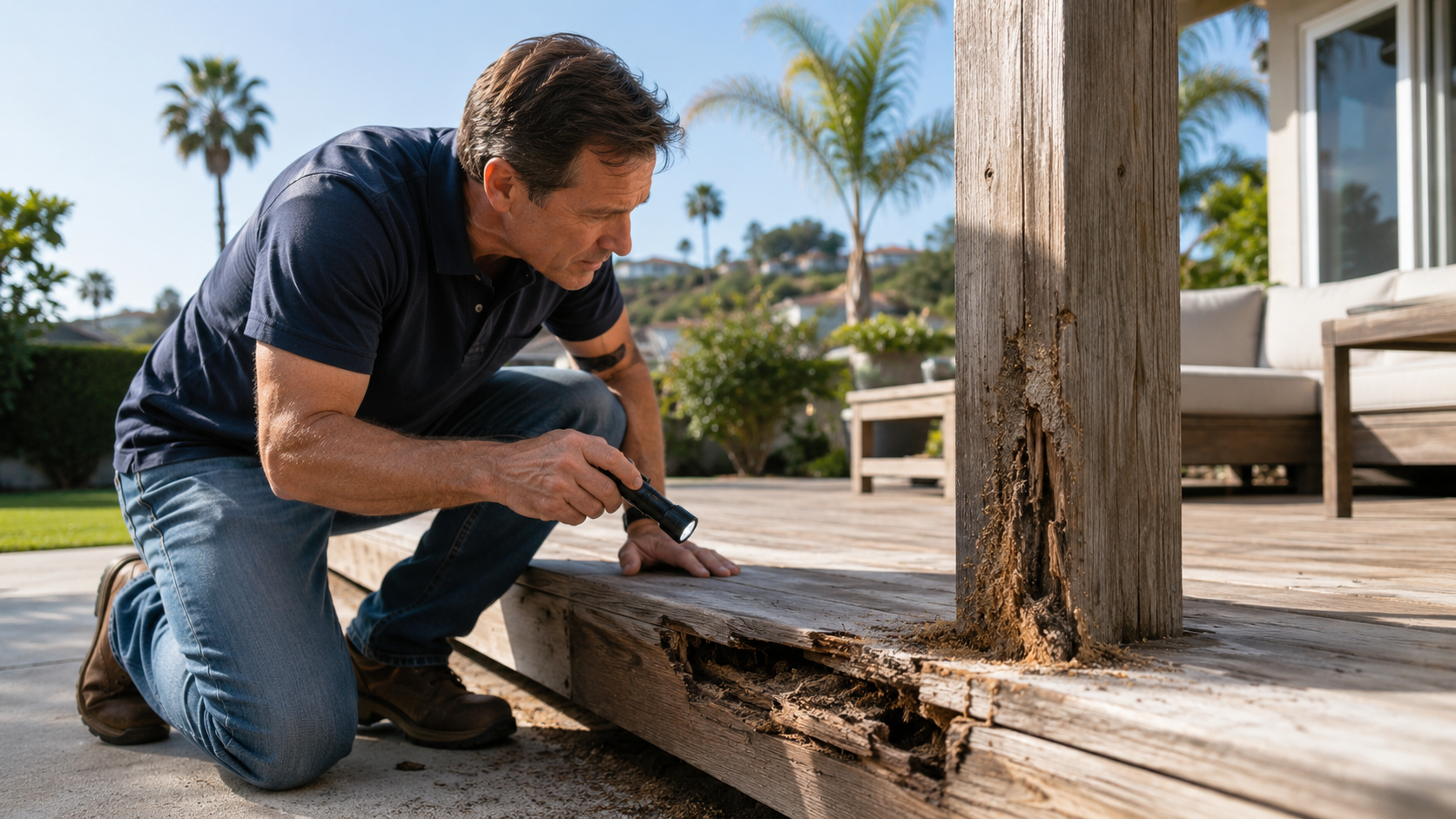
Some areas of a deck are more vulnerable because they collect water, remain shaded, or contain connections that can conceal deterioration.
Ledger Board
The ledger attaches many decks directly to the building. Water intrusion behind the ledger or improperly installed flashing can lead to hidden decay. Because ledger failure can cause a deck to pull away from the structure, visible staining, movement, loosened fasteners, or soft wood should be investigated promptly.
Posts and Post Bases
Posts may be vulnerable where they meet concrete, soil, or metal connectors. Water can collect at the base, while termite activity may travel upward from the ground. Inspect for cracking, softness, rusted hardware, mud tubes, and gaps around connections.
Joists and Beams
Joists and beams carry the deck’s loads. Their upper surfaces can retain moisture beneath deck boards, making decay difficult to see from below. Termites may also hollow out interior sections while leaving the outside relatively unchanged.
Railings
Loose railings are sometimes blamed on ordinary wear, but deterioration around rail-post connections can be a contributing factor. Because guardrails are essential fall-protection components, looseness should not be dismissed as a minor cosmetic defect.
Stairs and Landings
Stair stringers, treads, handrails, and landings experience constant exposure and repeated loading. Soft treads, cracked stringers, leaning handrails, or movement underfoot may indicate advanced deterioration.
Deck-to-Wall Connections
Exterior doors, wall transitions, siding intersections, and penetrations are frequent water-entry points. Moisture hidden behind finishes can affect framing before visible symptoms develop.
Is It Safe to Keep Using a Damaged Deck?
That depends on the location and severity of the damage. A small deteriorated area on a nonstructural trim board is different from decay or termite damage affecting a post, beam, ledger, joist, stair stringer, or guardrail connection.
Stop using the deck and arrange an inspection when you notice:
Significant sagging or movement
A deck pulling away from the building
Soft or crumbling beams, joists, or posts
Loose or leaning guardrails
Widespread hollow-sounding wood
Cracked or displaced structural connections
Stair movement or deteriorated stringers
Visible termite galleries in load-bearing components
Sudden changes in the deck’s level or stability
Avoid assuming that a deck is safe simply because the upper surface looks acceptable. Some of the most consequential deterioration occurs beneath boards, inside wood, behind wall finishes, or around concealed connections.
Why Surface Repairs May Not Solve the Problem
Replacing one damaged deck board may improve appearance, but it does not necessarily correct the underlying condition.
For dry rot, a complete repair must address the moisture source. That may involve repairing flashing, improving drainage, sealing penetrations, correcting waterproofing, or replacing improperly detailed components. New wood installed into the same wet conditions can eventually decay again.
For termite damage, replacing damaged wood does not eliminate an active colony. A qualified pest control professional may need to determine the termite type and recommend an appropriate treatment. After treatment, a deck or structural inspection may still be necessary to establish which components require replacement or reinforcement.
Cosmetic coatings, wood fillers, and surface patches should not be used to conceal deterioration in structural components.
When to Book a Professional Deck Inspection
A professional inspection is recommended whenever the cause, extent, or structural significance of the damage is uncertain.
Schedule an inspection when:
You cannot confidently distinguish dry rot vs termite damage
Wood feels soft, hollow, brittle, or unusually thin
Railings or stairs have become loose
Water regularly collects on or beneath the deck
Flashing appears damaged or incomplete
Termite droppings, mud tubes, wings, or swarmers are present
Previous repairs have not stopped the deterioration
The deck is older and has not been inspected recently
You are preparing to buy, sell, or renovate the property
An HOA needs documentation regarding elevated exterior elements
Structural members show cracking, sagging, separation, or movement
A deck inspection should evaluate more than individual surface boards. Depending on accessibility and the scope of service, an inspector may assess framing, posts, beams, joists, ledgers, stairs, railings, visible hardware, connections, drainage conditions, and signs of moisture intrusion or pest damage.
At The Sterling Watson Collective, our professional deck inspection services are designed to identify visible deterioration, structural concerns, maintenance needs, and potential safety hazards before they become larger problems.
Professional Deck Inspections From The Sterling Watson Collective
At The Sterling Watson Collective in Los Angeles, we provide full-service structural engineering resources throughout Southern California. Our capabilities include structural engineering, architecture, land development, drafting, general contracting, project support, skilled labor, and related design and construction services. This multidisciplinary approach allows us to evaluate deck concerns in the broader context of structural performance, building connections, moisture exposure, repair planning, and long-term property safety.
Our deck inspection services help residential homeowners, HOA boards, property managers, and commercial property owners better understand the condition of elevated outdoor structures. We inspect for visible deterioration, unsafe conditions, compromised components, and issues that may require maintenance, repair, pest evaluation, or additional structural analysis. When wood damage is discovered, our goal is to provide clear, actionable information rather than relying on cosmetic assumptions.
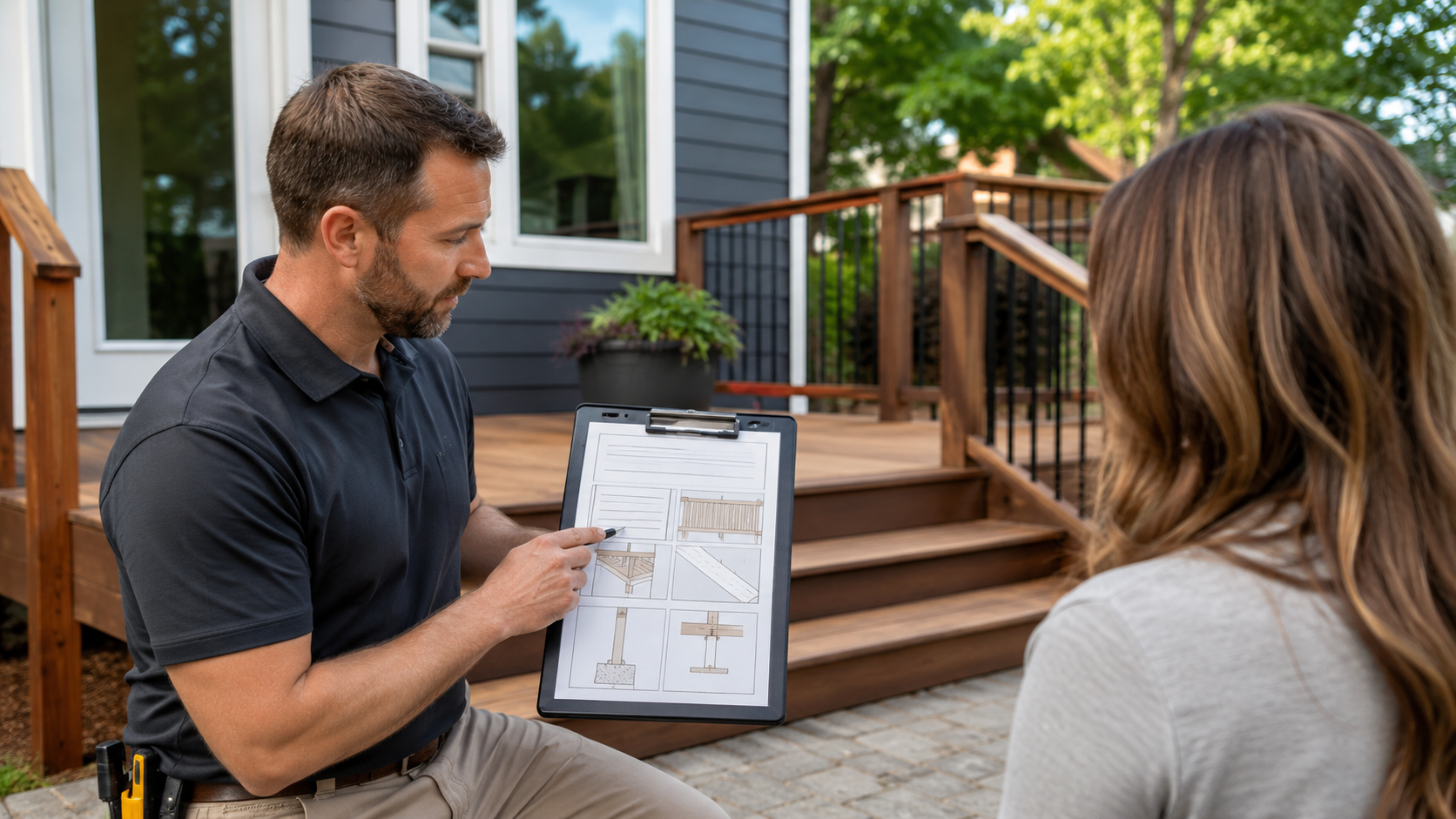
Schedule a Deck Inspection in Southern California. Contact The Sterling Watson Collective Today
The difference between dry rot vs termites is not always obvious, especially when deterioration is hidden inside framing or behind exterior finishes. Dry rot typically breaks down wood through moisture-supported fungal activity, while termites create internal tunnels and consume the wood itself. Both conditions can reduce structural strength, and both can become more difficult and expensive to correct when left unaddressed.
Residential homeowners and HOA managers should not wait for a railing, stairway, deck board, or structural connection to fail before seeking professional guidance.
Contact us at The Sterling Watson Collective to schedule a professional deck inspection in Los Angeles or elsewhere in Southern California. We can assess visible conditions, identify areas of concern, and help you determine the appropriate next steps for maintaining a safer, more dependable deck.
FAQs
-
Dry rot is caused by fungi that break down damp wood, while termites damage wood by feeding on it from the inside. Dry rot often leaves wood soft, cracked, or crumbly, whereas termite damage typically creates hollow galleries and may be accompanied by mud tubes, frass, or discarded wings.
-
Neither is inherently worse, as both can significantly weaken a deck if left untreated. The severity depends on how extensive the damage is, which structural components are affected, and how quickly the issue is identified and repaired.
-
Yes. Both conditions can cause wood to weaken, crack, and deteriorate, making them difficult to distinguish without a closer inspection. Looking for moisture-related decay, mud tubes, frass, or insect activity can help identify the likely cause.
-
A wood deck should be inspected periodically, especially as it ages or after severe weather events. Professional inspections are also recommended whenever signs of wood deterioration, loose railings, structural movement, or possible termite activity are discovered.