What Is a Deck Inspection Report and What Does It Include?
Decks, balconies, elevated walkways, and similar exterior structures are constantly exposed to weather, moisture, changing temperatures, and everyday use. Over time, these conditions can contribute to deterioration that may not always be obvious from the surface. A professional deck inspection provides property owners and managers with a clearer understanding of a structure's current condition and any areas that may require attention.
A deck inspection report documents the findings of that inspection. It provides a written record of the components evaluated, observed conditions, potential safety concerns, and recommended next steps. For residential homeowners, HOA managers, and commercial property owners in California, a professional report can be particularly valuable for identifying deterioration before it develops into a more significant structural or safety issue.
What Is a Deck Inspection Report?
A deck inspection report is a formal document prepared after a qualified professional evaluates an elevated deck, balcony, walkway, stair system, or related exterior elevated element. The report records visible conditions and other findings from the inspection and may identify deterioration, damaged components, potential structural concerns, or areas requiring additional investigation.
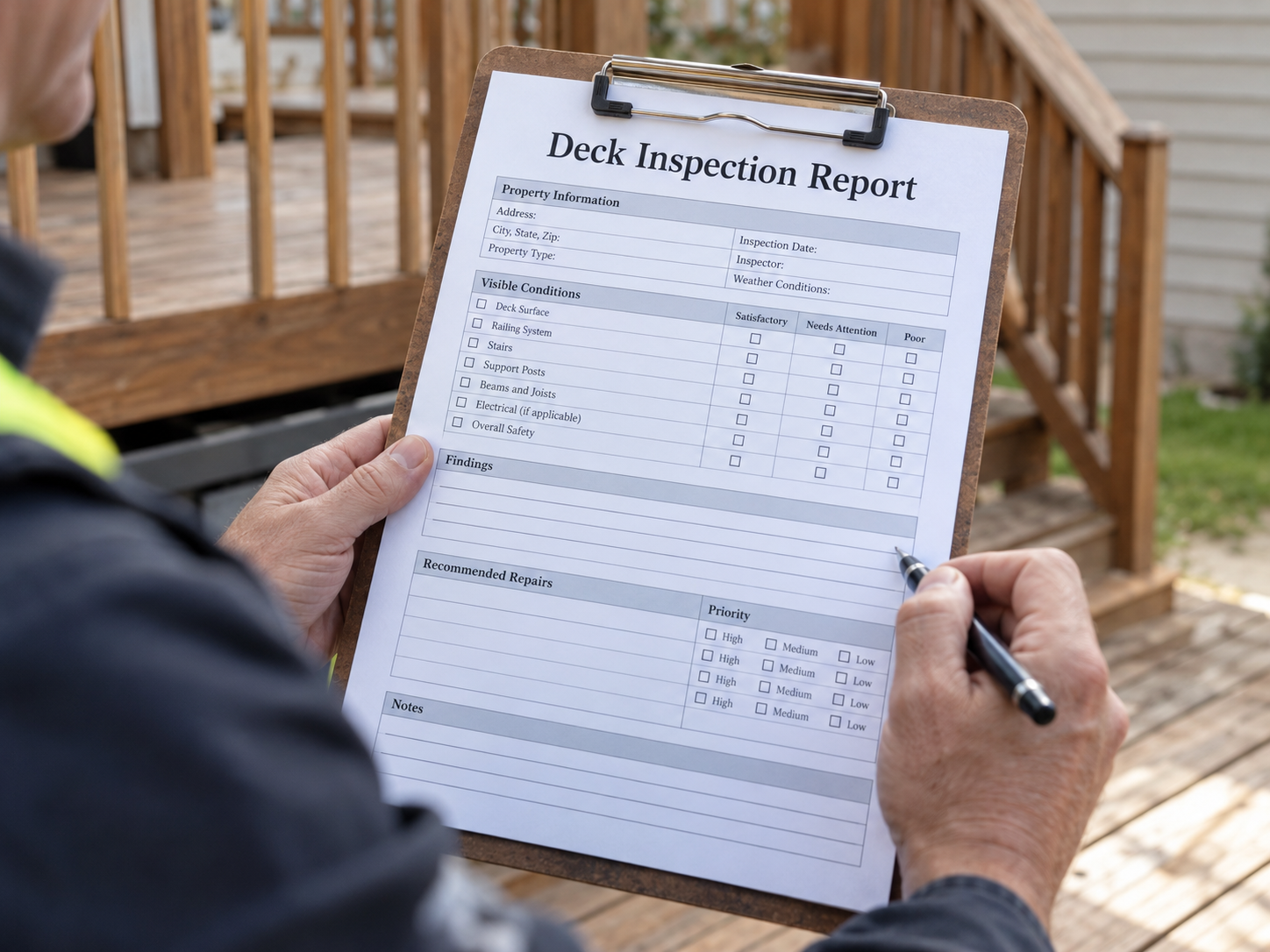
The exact contents of a report depend on the property, type of structure, inspection scope, and applicable requirements. In general, however, a California deck inspection report provides property owners with documentation that can be used to understand existing conditions and determine whether maintenance, repairs, further evaluation, or other corrective work may be appropriate.
What Does a California Deck Inspection Report Include?
While every property is different, a professional report typically covers the major structural and safety-related components of the deck or elevated exterior structure. The inspector's findings may be supported by written observations, photographs, descriptions of deficiencies, and recommendations.
Common information included in a deck inspection report may include:
Property and inspection information
Description of the deck, balcony, or elevated structure
Structural component observations
Signs of deterioration or damage
Moisture- or water-related concerns
Guardrail and handrail conditions
Stairway conditions
Connections and attachment points
Photographs documenting observed conditions
Identified safety concerns or deficiencies
Recommendations for repairs or additional evaluation
The report creates a centralized record rather than requiring the property owner or manager to rely solely on a verbal explanation following the inspection.
Structural Components Inspectors Evaluate
One of the primary purposes of a deck inspection is to assess the condition of the components responsible for supporting the structure and its occupants. Inspectors evaluate accessible structural elements for signs of damage, deterioration, movement, improper connections, or other potential concerns.
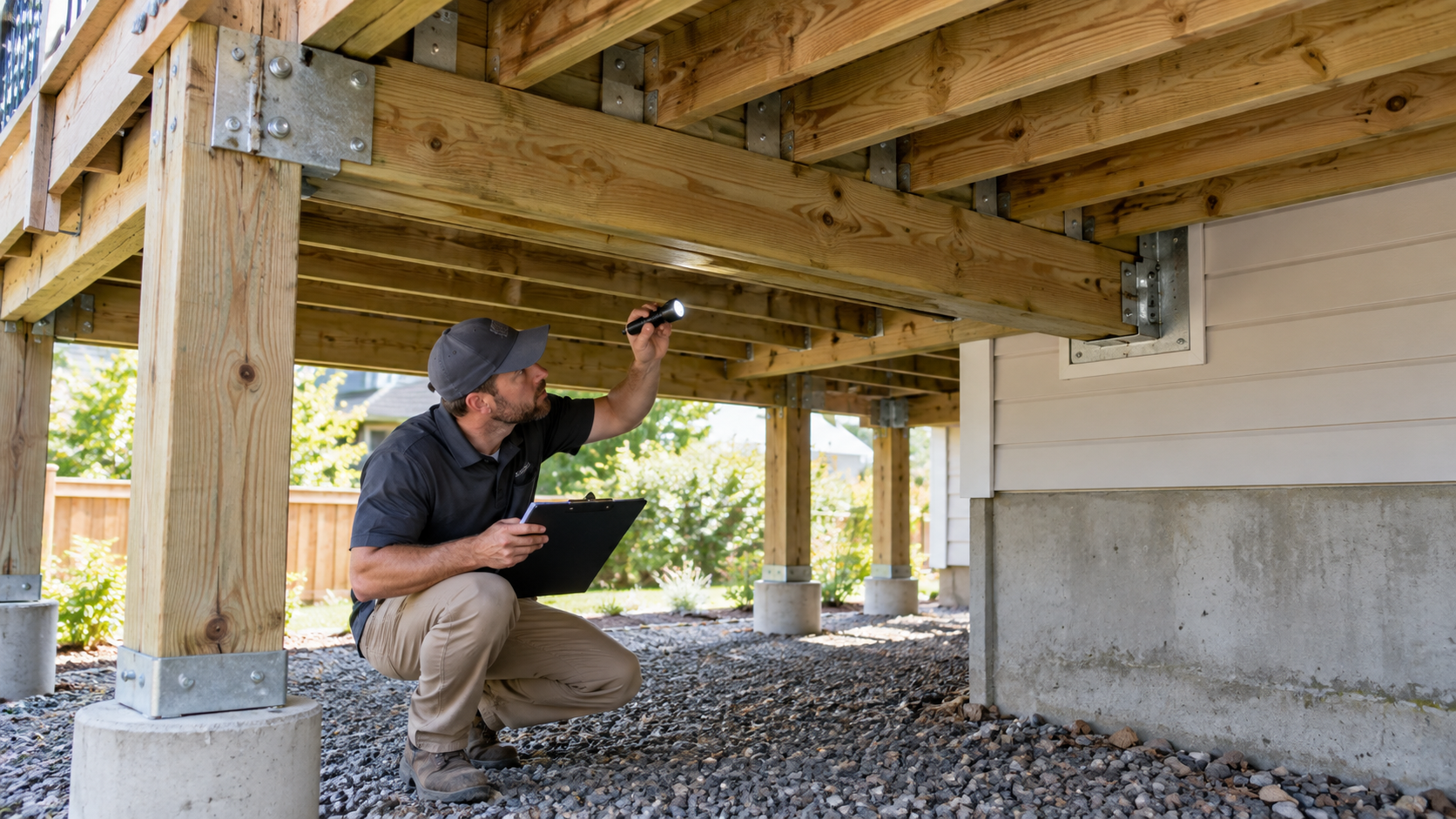
Depending on the design of the deck, this evaluation may include:
Posts and Columns
Posts and columns transfer loads from the elevated structure to the foundation or supporting surface below. Inspectors may look for deterioration, cracking, corrosion, movement, improper connections, or other conditions that could affect their performance.
Beams and Joists
Beams and joists form much of the deck's underlying structural framework. The inspection may identify damaged wood, corrosion in metal components, excessive deflection, moisture-related deterioration, or other visible conditions affecting these elements.
Connections and Fasteners
Connections are critical because even components that remain in relatively good condition depend on secure attachment to function properly. Inspectors may examine bolts, screws, nails, brackets, hangers, anchors, and other connectors for corrosion, looseness, damage, or deterioration.
Deck-to-Building Connections
When a deck or balcony is attached to a building, the connection between the two structures can be an important part of the inspection. Accessible ledger boards, flashing, anchors, and surrounding materials may be evaluated for evidence of deterioration or moisture intrusion.
Decking, Railings, Stairs, and Walking Surfaces
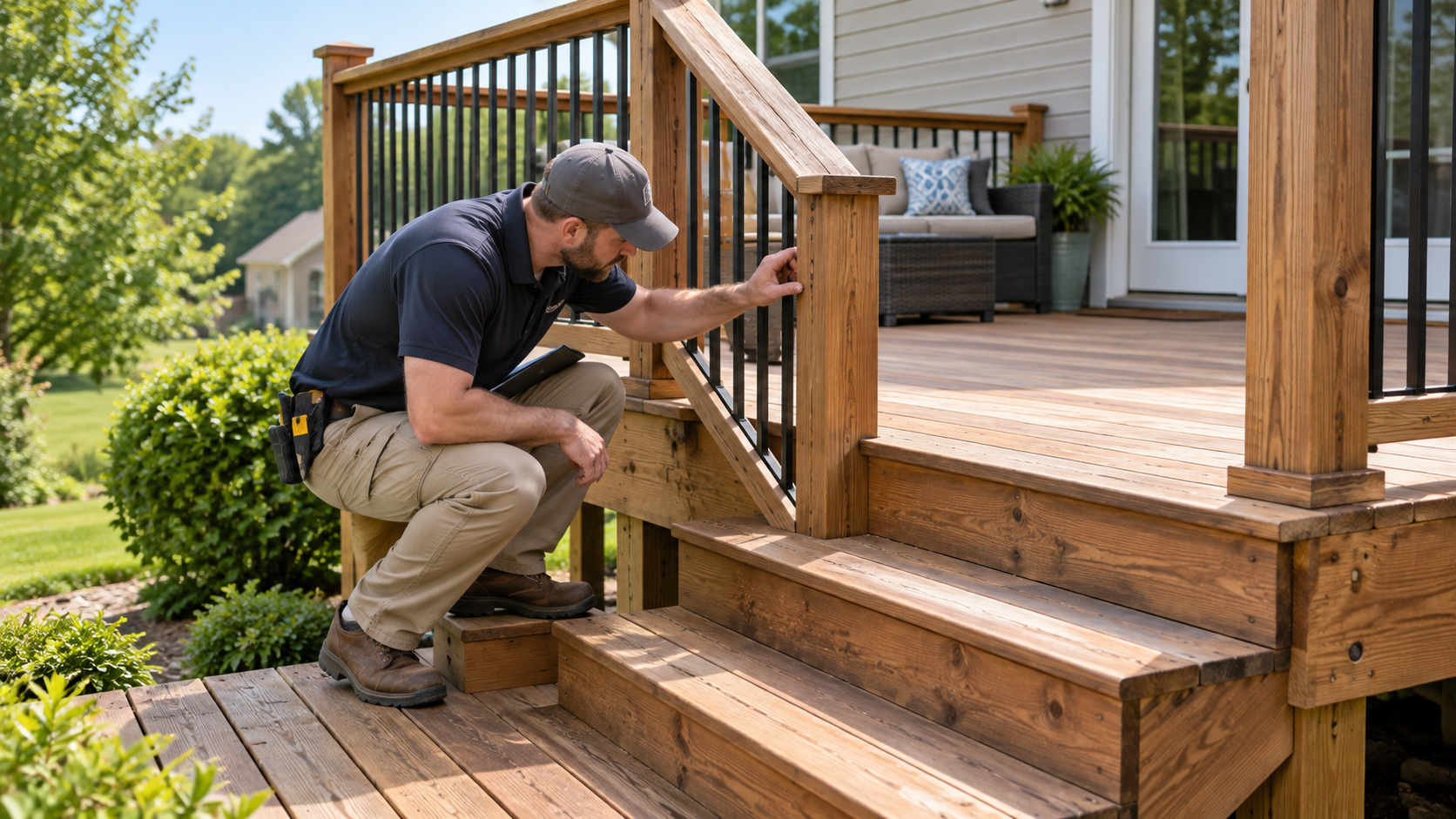
A comprehensive deck inspection report goes beyond the primary framing. Inspectors may also evaluate components that occupants regularly walk on, lean against, or use to access the elevated area.
Decking and Walking Surfaces
Deck boards and other walking surfaces may be inspected for cracking, decay, loose materials, uneven surfaces, deterioration, or other conditions that could create a safety concern. Inspectors can also look for evidence of water accumulation or drainage problems.
Guardrails and Handrails
Guardrails are particularly important on elevated decks and balconies. An inspection may evaluate their visible condition, stability, connections, and signs of deterioration or damage.
Stairs and Landings
Exterior stairs can experience many of the same problems as decks. Inspectors may examine stair framing, treads, risers, landings, railings, and connections to identify deterioration, instability, or other potential safety issues.
Signs of Water Intrusion and Material Deterioration
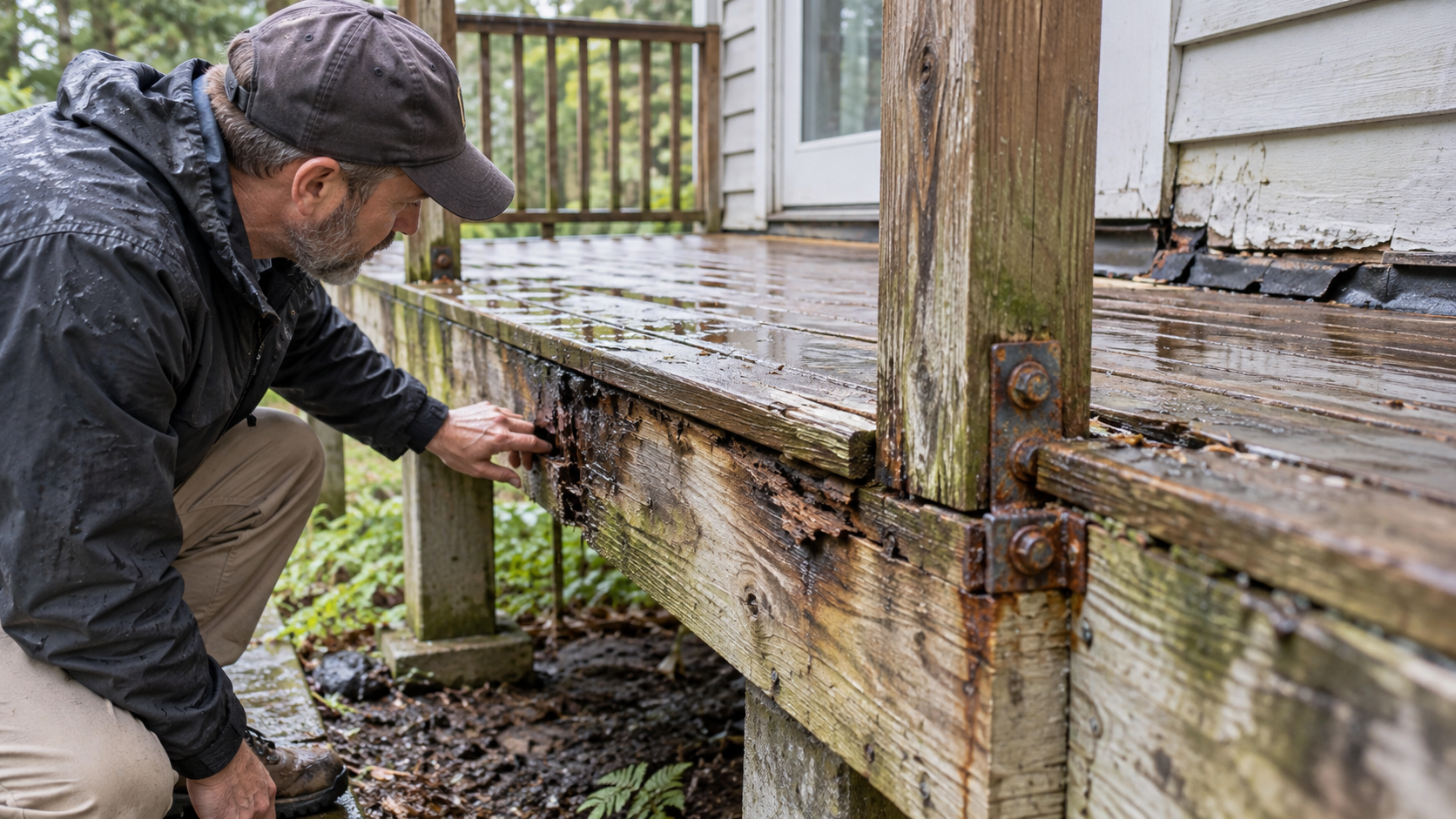
Water is one of the most significant sources of long-term problems for exterior elevated structures. Repeated moisture exposure can contribute to wood decay, corrosion, damaged finishes, and deterioration of structural materials and connections.
During an inspection, professionals may look for conditions such as:
Wood rot or decay
Rust and corrosion
Water staining
Cracked or deteriorated waterproofing
Damaged flashing
Ponding or inadequate drainage
Soft or deteriorated wood
Discoloration associated with prolonged moisture
Deteriorated sealants or coatings
Some of these problems can develop in concealed or difficult-to-access areas. When visible conditions indicate the possibility of hidden deterioration, the report may recommend additional investigation.
How Inspectors Identify Potential Deck Safety Issues
A professional inspection is intended to do more than create a checklist of individual components. Inspectors consider how observed conditions could affect the overall safety and performance of the structure.
For example, a single corroded fastener may appear minor by itself. Widespread corrosion across important connections, however, may indicate a more substantial concern. Similarly, staining may simply reflect past moisture exposure, or it may point toward an ongoing waterproofing or drainage problem that warrants further investigation.
A California deck inspection report organizes these findings so property owners can distinguish between routine maintenance items and conditions that may require more immediate professional attention.
Are Photographs Included in a Deck Inspection Report?
Photographs can be an important component of a professional deck inspection report because they provide visual documentation of conditions observed during the inspection. Images may show deterioration, corrosion, damaged materials, problematic connections, water intrusion, or other noteworthy findings.
Photographic documentation can be especially useful for HOA boards, property managers, and commercial property owners who need to communicate inspection findings to multiple stakeholders. It can also provide a useful record when planning repairs or discussing findings with engineers, contractors, architects, or other professionals.
What Happens When a Deck Inspection Finds a Problem?
Finding a deficiency does not automatically mean an entire deck needs to be replaced. The appropriate response depends on the type, location, severity, and extent of the problem.
A deck inspection report may recommend steps such as routine maintenance, targeted repairs, replacement of deteriorated components, waterproofing improvements, further structural evaluation, or more detailed investigation of concealed areas.
Significant structural or safety concerns may require evaluation by a qualified structural engineering professional. Having access to both inspection and engineering resources can make it easier to determine the appropriate next steps when more complex conditions are discovered.
Why Deck Inspection Reports Are Important for California Properties
California property owners and managers may have several reasons to obtain and maintain inspection documentation. Beyond helping identify existing deterioration, a report provides a snapshot of the structure's condition at a particular point in time.
A professional report can help:
Identify potential safety concerns before they become more severe
Document the current condition of exterior elevated structures
Prioritize maintenance and repair projects
Support long-term property maintenance planning
Provide useful information to engineers and contractors
Help HOA boards and property managers communicate findings
Establish documentation for inspections required under applicable California laws
California also has inspection requirements that can apply to certain multifamily residential properties and exterior elevated elements. Property owners and HOA managers should determine which requirements apply to their specific property and ensure inspections are performed by professionals who meet applicable qualification requirements.
How Often Should You Get a Deck Inspection?
The appropriate inspection schedule depends on several factors, including the type of property, age and construction of the structure, exposure to moisture, material condition, and any applicable legal requirements.
Even when a formal inspection is not immediately required, property owners should pay attention to visible warning signs such as loose railings, soft wood, corrosion, movement, cracked waterproofing, persistent moisture, or changes in the way a deck or balcony feels underfoot. Suspected structural or safety problems should be professionally evaluated rather than left until the next routine maintenance cycle.
Professional Deck Inspections From The Sterling Watson Collective
At The Sterling Watson Collective in Los Angeles, we provide full-service structural engineering resources throughout Southern California. Our multidisciplinary capabilities include engineering, architecture, land development, drafting, general contracting, skilled labor resources, and additional services that allow us to assist clients with a wide variety of property and structural needs.
Our deck inspection services help residential homeowners, HOA managers, and commercial property owners better understand the condition of decks, balconies, and other exterior elevated structures. By combining inspection capabilities with broader structural engineering and construction resources, we can help clients identify potential concerns and understand the appropriate next steps when maintenance, repairs, or further professional evaluation may be needed.
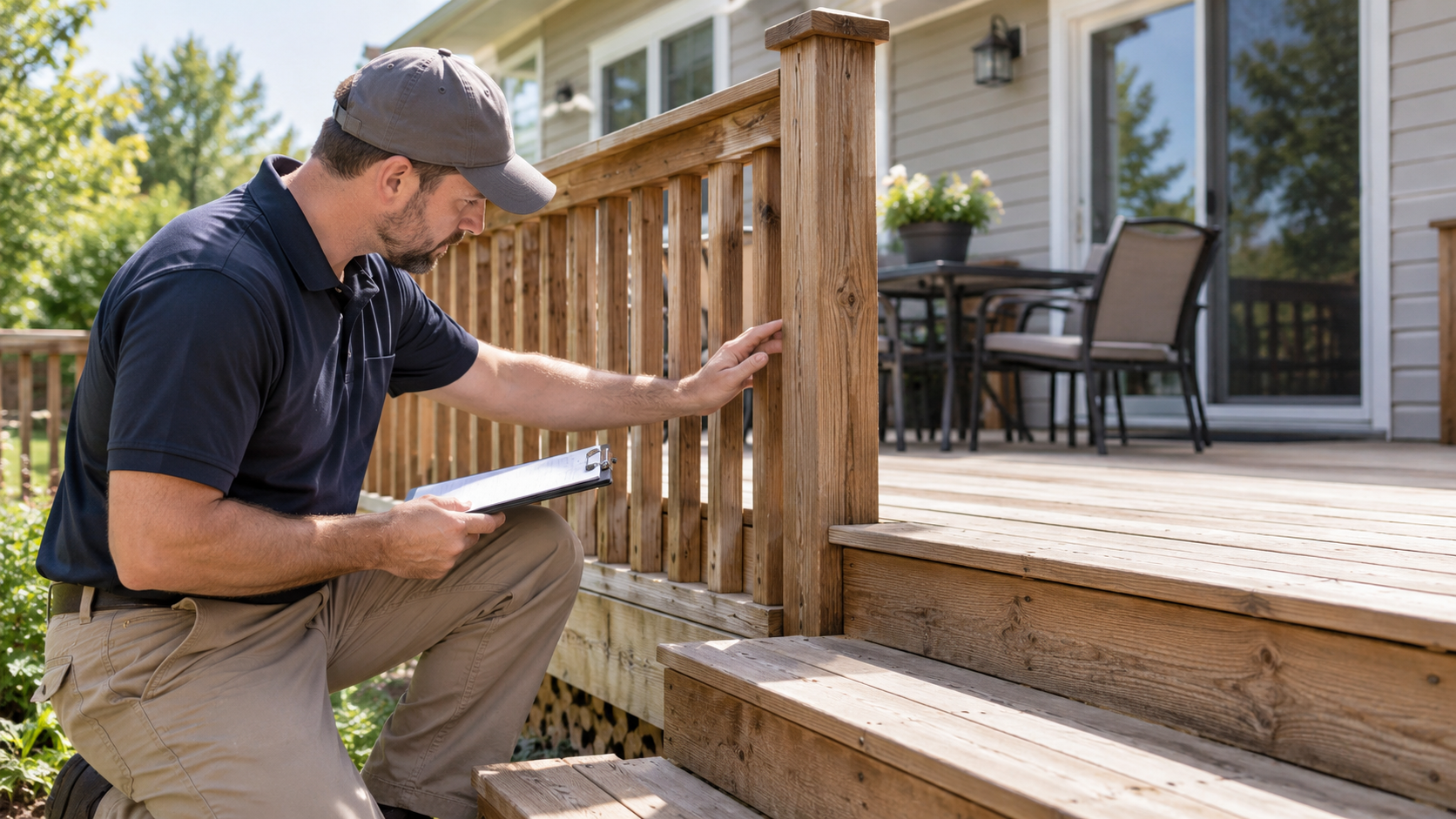
Schedule a Professional Deck Inspection in Southern California
A deck can appear functional while deterioration develops in structural connections, framing, waterproofing systems, or other less-visible areas. A professional deck inspection report provides valuable documentation of current conditions and can help identify potential safety issues before they become larger problems.
If you are a homeowner, HOA manager, or commercial property owner in Southern California, contact The Sterling Watson Collective to schedule a professional deck inspection. Our team can evaluate your exterior elevated structures, document relevant findings, and help you determine the appropriate next steps for maintaining a safe and reliable property.
FAQs
-
A California deck inspection report may include observations of framing, supports, connections, walking surfaces, railings, stairs, waterproofing, drainage, and signs of deterioration. The specific contents can vary depending on the property, inspection scope, and applicable requirements.
-
Inspectors typically look for signs of wood decay, corrosion, water intrusion, damaged framing, loose connections, deteriorated waterproofing, and unsafe railings or stairs. They may also evaluate whether visible structural components show signs of movement, damage, or deterioration.
-
Inspection frequency depends on the property's construction, age, condition, exposure to moisture, and any applicable California inspection requirements. Property owners should also consider an inspection whenever they notice deterioration, movement, loose railings, water damage, or other potential safety concerns.
-
The inspection report may describe the observed damage and recommend maintenance, repairs, additional investigation, or structural engineering evaluation. The appropriate response will depend on the location, extent, and severity of the identified condition.