A failed deck inspection can be frustrating for California homeowners, HOA managers, and commercial property owners, especially when the results reveal unexpected structural problems or building code violations. However, a deck that failed inspection doesn't necessarily need to be completely rebuilt. Many common violations can be addressed through targeted repairs, structural reinforcement, or replacement of specific components.
Understanding why your deck failed inspection is the first step toward restoring its safety and compliance. From deteriorating support posts and improper ledger connections to unstable railings and inadequate waterproofing, identifying the underlying problems can help you determine the most practical course of action.
In this guide, we'll explore the most common deck inspection failures in California, explain how to correct them, and outline the steps to take before scheduling another inspection.
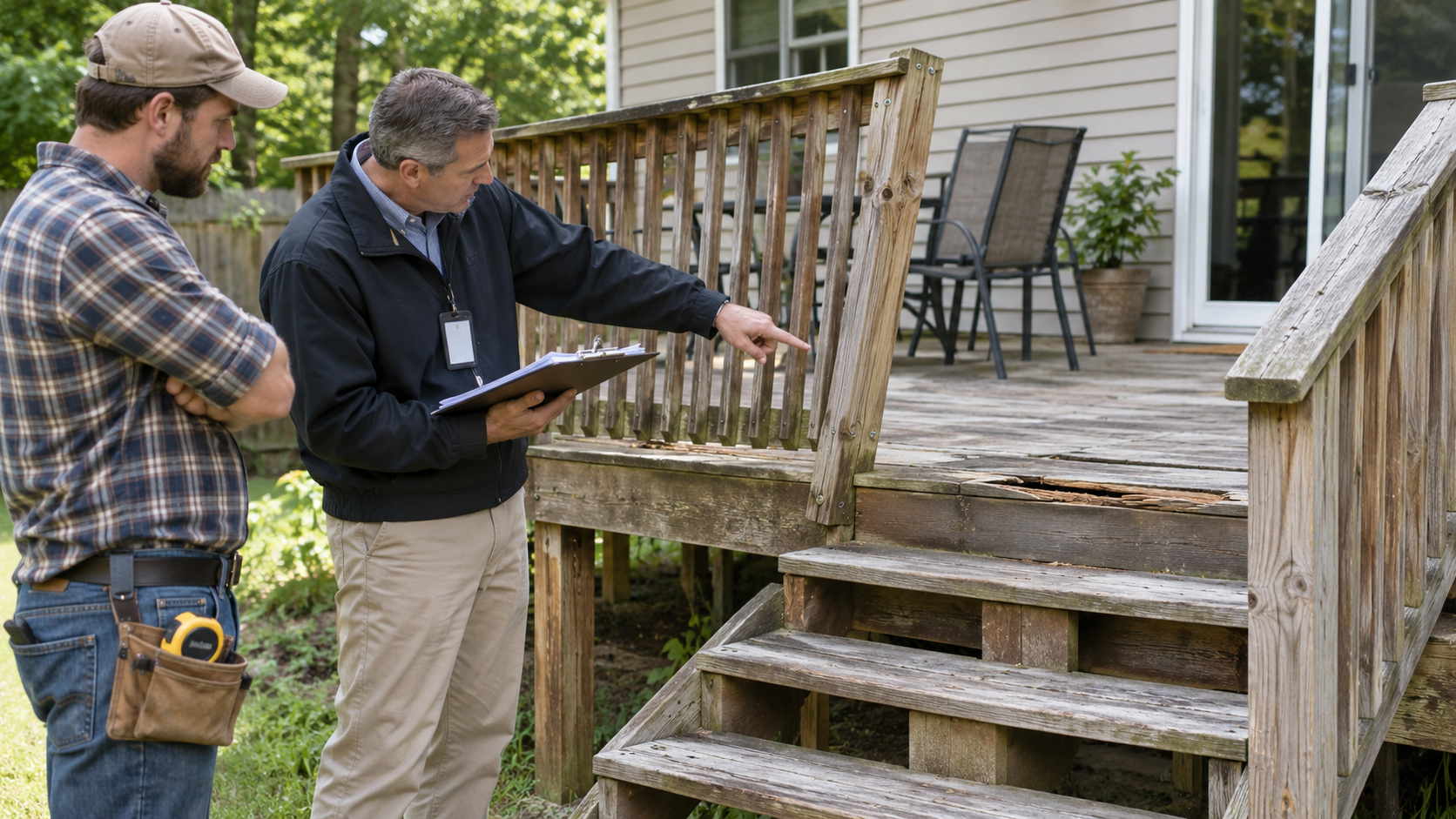
What Does It Mean When Your Deck Failed Inspection?
When a deck fails inspection, it means an inspector identified one or more conditions that do not satisfy applicable building requirements, structural safety standards, or inspection criteria. These findings may range from relatively minor maintenance concerns to serious structural deficiencies that make the deck unsafe for continued use.
In California, decks may be evaluated under the California Building Code, California Residential Code, applicable local building ordinances, and other inspection requirements depending on the property type. The 2025 California Building Standards Code became effective January 1, 2026, for new permit applications, although the applicable standards for existing structures and ongoing projects depend on their circumstances.
Some common reasons a deck fails inspection include:
Deteriorated or improperly installed structural supports
Loose, unstable, or noncompliant guardrails
Missing or inadequate deck-to-building connections
Damaged decking, joists, beams, or posts
Insufficient waterproofing or drainage
Corroded fasteners and structural hardware
Unsafe stairs, handrails, or walking surfaces
Construction that does not match approved plans
Importantly, a failed inspection does not automatically mean every component is defective. An experienced structural engineering professional can help determine which issues require immediate attention and which components can potentially be repaired or retained.
8 Common Deck Code Violations and How to Fix Them
Although every deck has different construction characteristics, certain structural and safety issues appear frequently during inspections. Understanding these common violations can help property owners address deficiencies efficiently without committing to unnecessary reconstruction.
1. Loose or Improperly Installed Deck Railings
Deck guardrails are essential safety features, particularly on elevated structures where falls can result in serious injuries. An inspection may identify loose guard posts, insufficient guard height, excessive openings, or connections that cannot adequately resist required loads.
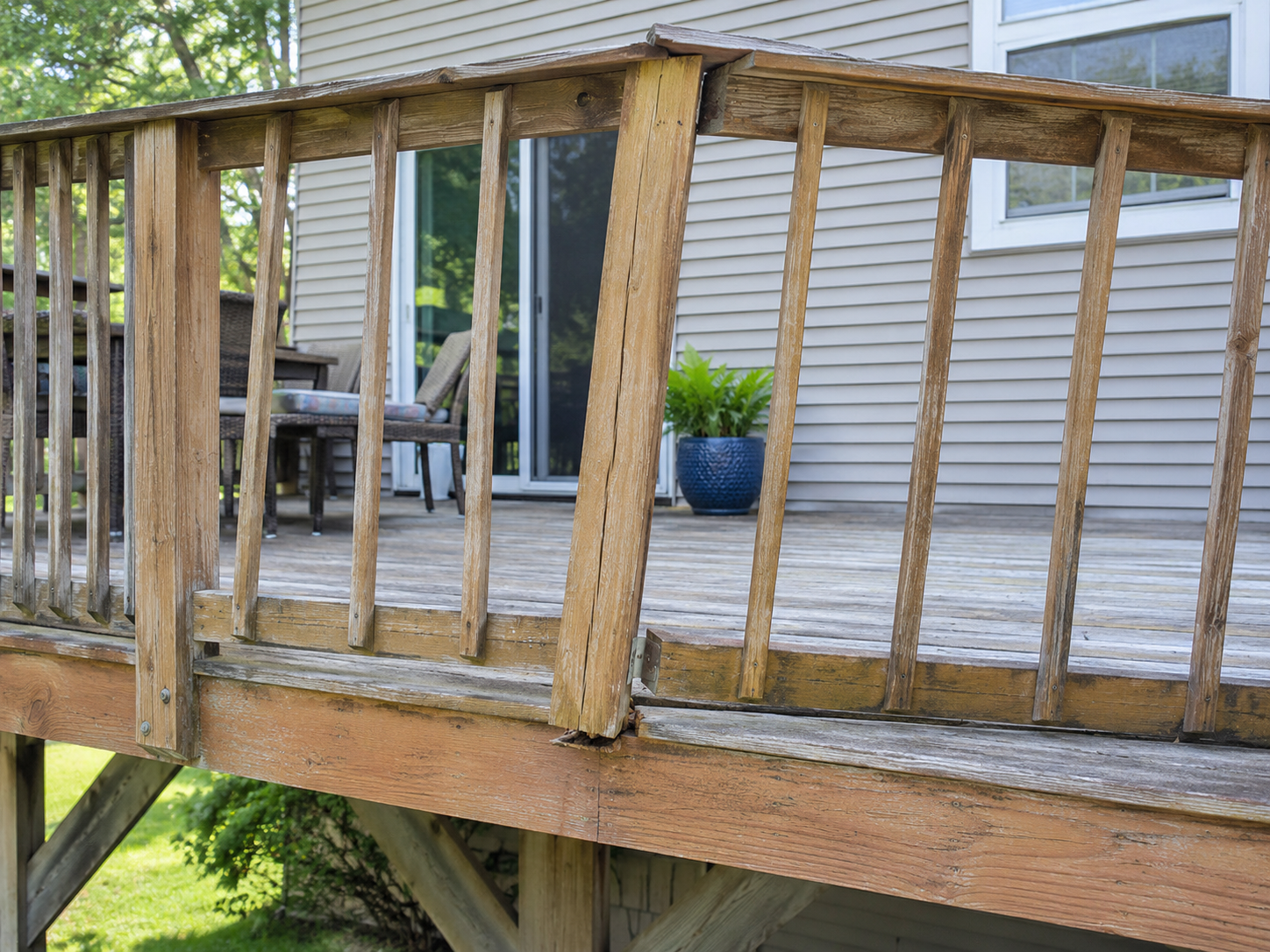
How to fix it: Depending on the issue, corrections may involve reinforcing guardrail connections, replacing damaged posts, adjusting guard heights, or installing a new compliant guardrail system. A qualified professional should confirm that the repaired guards meet the applicable dimensional and structural requirements rather than simply tightening loose hardware.
2. Improper Ledger Board Connections
A ledger board connects an attached deck to the primary building and transfers structural loads into its supporting framing. Missing fasteners, deteriorated connections, improper attachment to unsuitable materials, or inadequate flashing can compromise the entire structure.
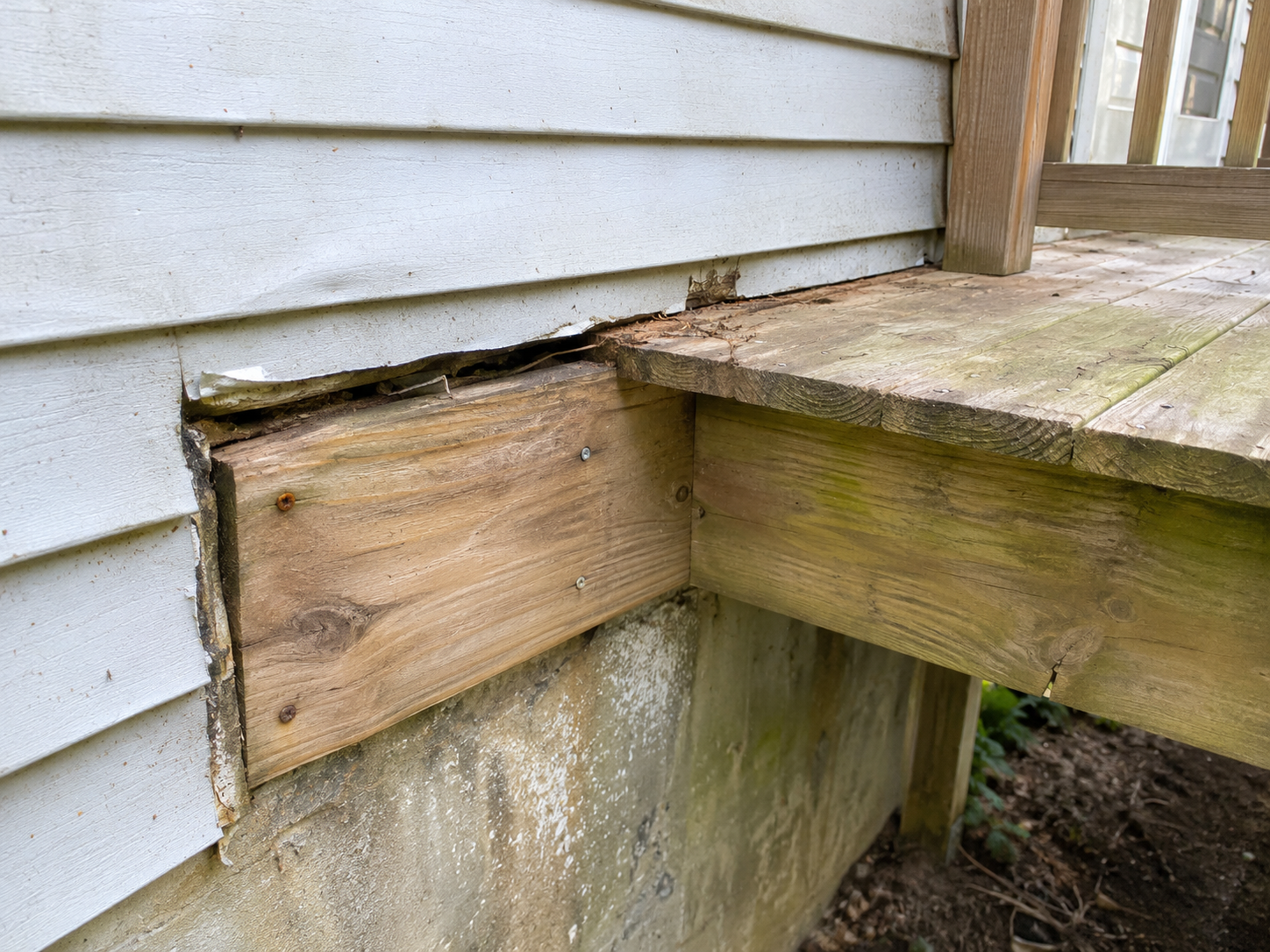
How to fix it: Repairs may require installing approved structural fasteners, correcting the attachment configuration, replacing a damaged ledger, or improving flashing around the connection. In some cases, an engineer may recommend constructing an independently supported deck when a reliable building connection cannot be achieved.
3. Rotted or Deteriorating Wood Components
Wood rot is a common problem in California decks exposed to moisture, irrigation, condensation, and inadequate drainage. Inspectors may discover soft joists, deteriorating support posts, damaged beams, or weakened decking that can no longer perform as intended.
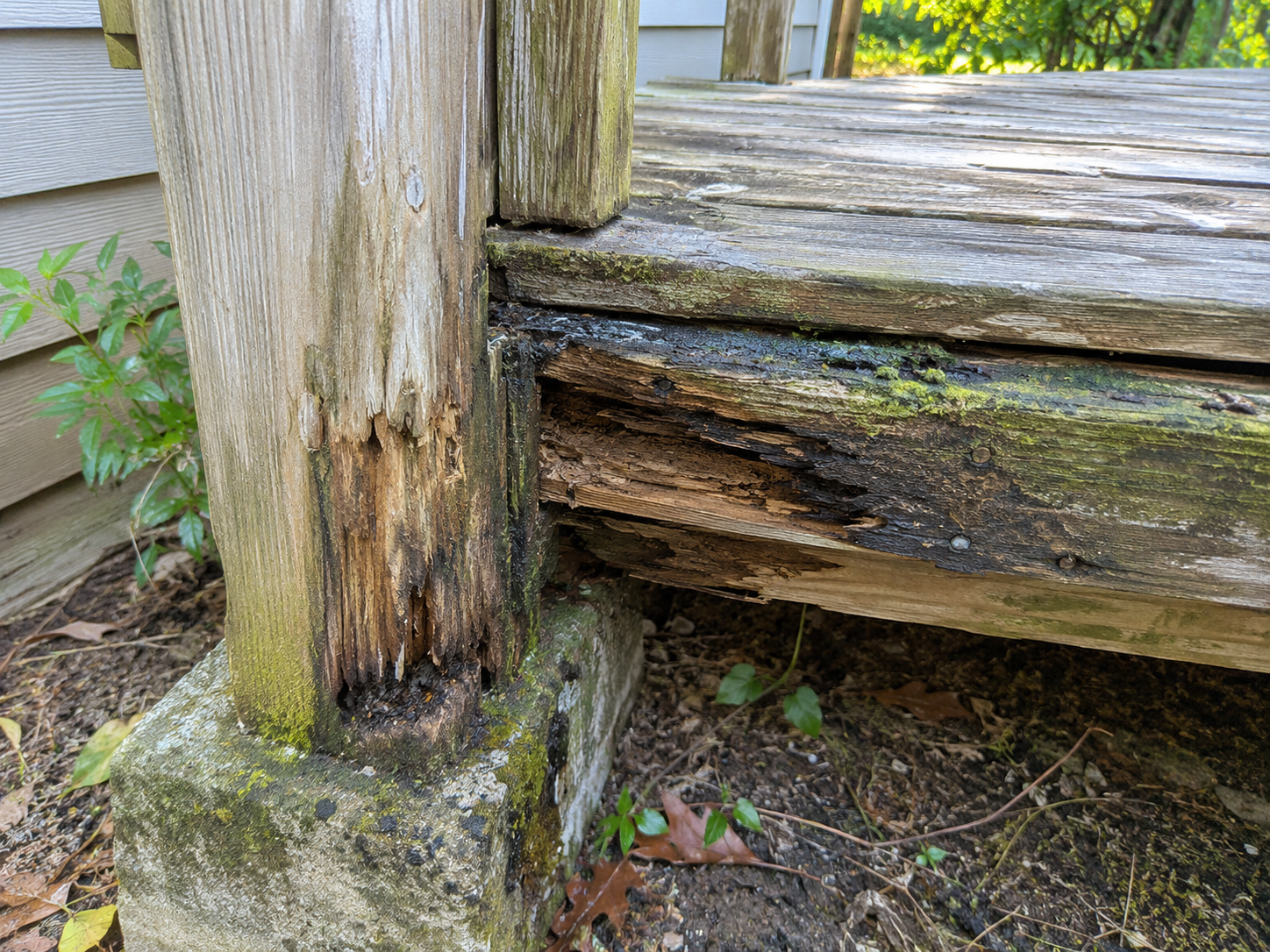
How to fix it: Localized deterioration may be corrected by replacing individual boards or structural members while retaining unaffected components. However, extensive decay affecting multiple load-bearing elements may require more substantial reconstruction, especially when hidden damage extends beyond the visibly deteriorated areas.
4. Inadequate Footings and Support Posts
Deck footings and support posts transfer structural loads into the ground. Common inspection concerns include unstable foundations, improperly supported posts, insufficient anchorage, settlement, and support systems that were not designed for anticipated loads.
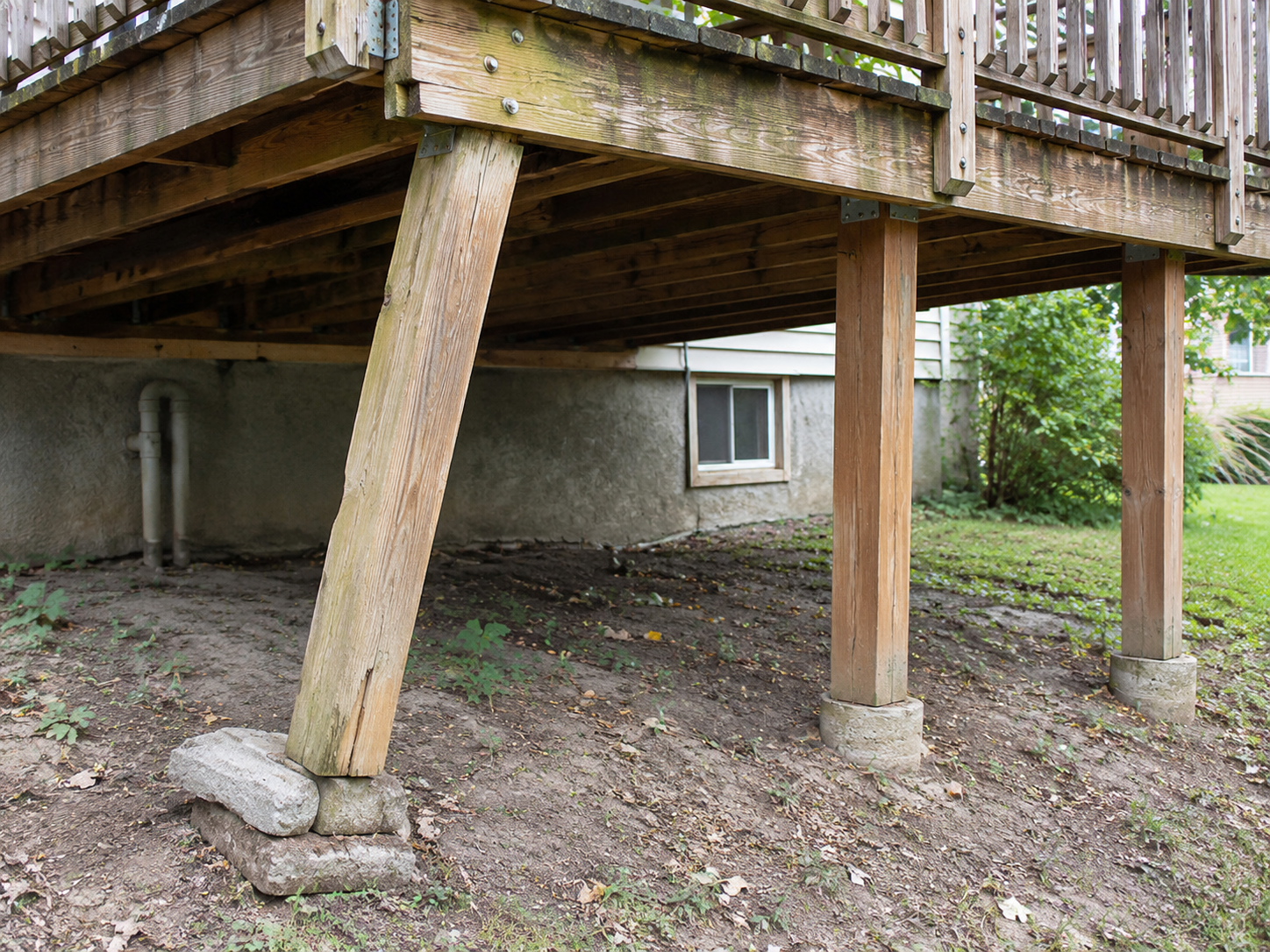
How to fix it: Depending on the deficiency, corrections may involve strengthening post connections, replacing compromised supports, installing engineered footings, or modifying the load-bearing system. A structural engineer should evaluate significant foundation problems before any major repairs begin.
5. Unsafe Deck Stairs and Handrails
Deck stairs must provide safe access between elevations. Uneven riser heights, improper tread dimensions, missing handrails, unstable stair framing, and insufficient landings are common reasons inspectors identify stairway violations.
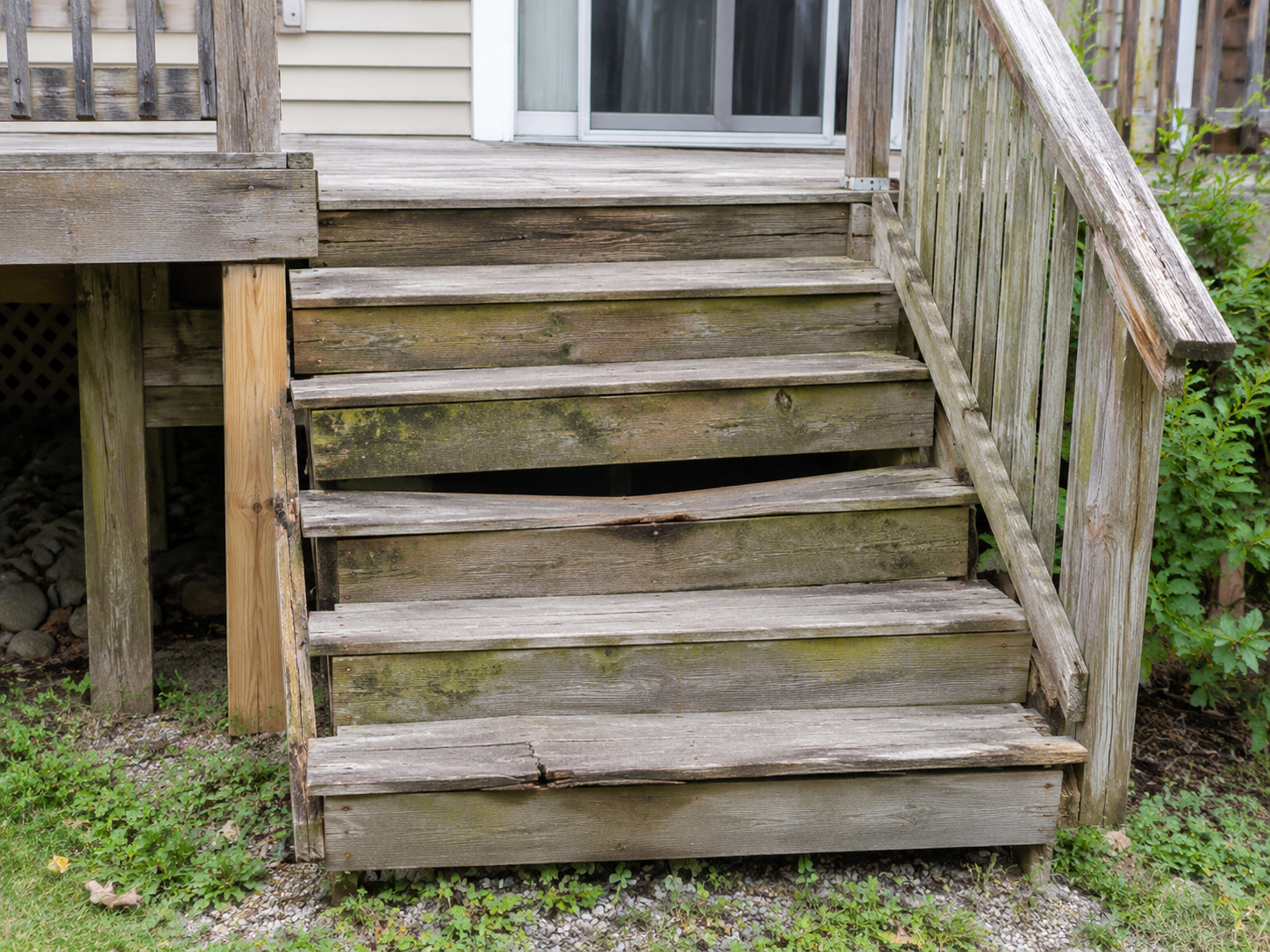
How to fix it: Repairs may include replacing individual stair components, adjusting handrail configurations, reinforcing stringer connections, or rebuilding the stair assembly. The appropriate solution depends on the extent of the deficiencies and the applicable stairway requirements.
6. Corroded or Incorrect Structural Fasteners
Fasteners and metal connectors play an important role in maintaining a deck's structural integrity. Corrosion, incompatible metals, missing joist hangers, improperly installed brackets, or the use of unsuitable screws can weaken critical connections over time.
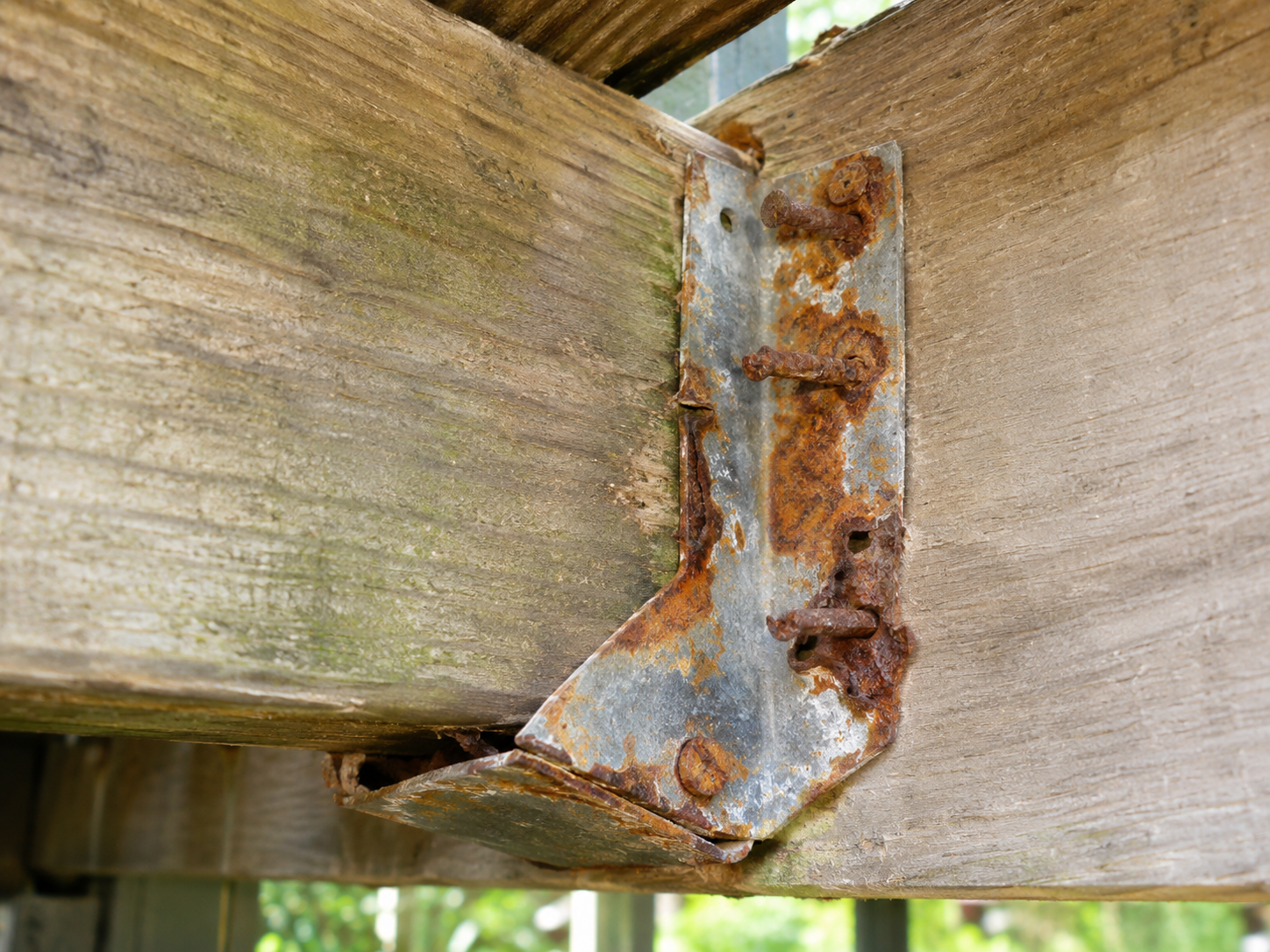
How to fix it: Damaged or inappropriate hardware should be replaced with properly specified connectors and fasteners suitable for the deck's materials and environmental conditions. Structural repairs should follow manufacturer installation instructions and any applicable engineering specifications to ensure adequate load transfer.
7. Poor Waterproofing and Drainage
Inadequate waterproofing can allow moisture to penetrate deck surfaces, structural framing, and areas where the deck connects to a building. Waterproof deck coatings, membranes, flashing, and drainage systems may deteriorate over time, creating concealed conditions that threaten structural safety.
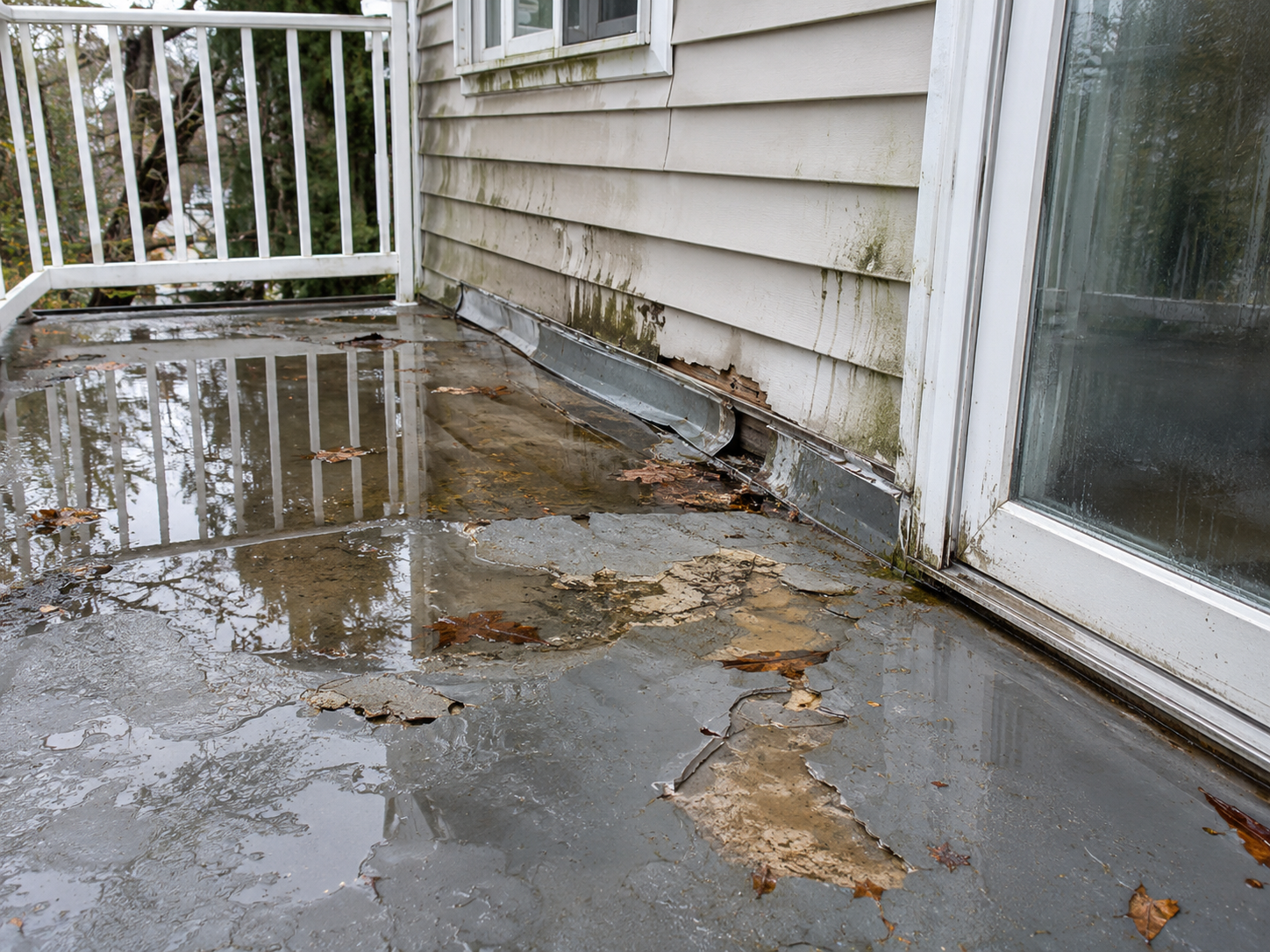
How to fix it: Corrections may include repairing waterproofing membranes, replacing damaged flashing, improving drainage slopes, sealing vulnerable penetrations, or addressing underlying water intrusion. Any moisture-related structural damage should be evaluated and repaired before installing new waterproofing materials.
8. Insufficient Structural Capacity or Improper Framing
Deck framing must safely support the loads anticipated during normal use. Overspanned joists, undersized beams, inadequate lateral restraint, or unauthorized modifications may cause excessive movement, sagging, or structural instability.
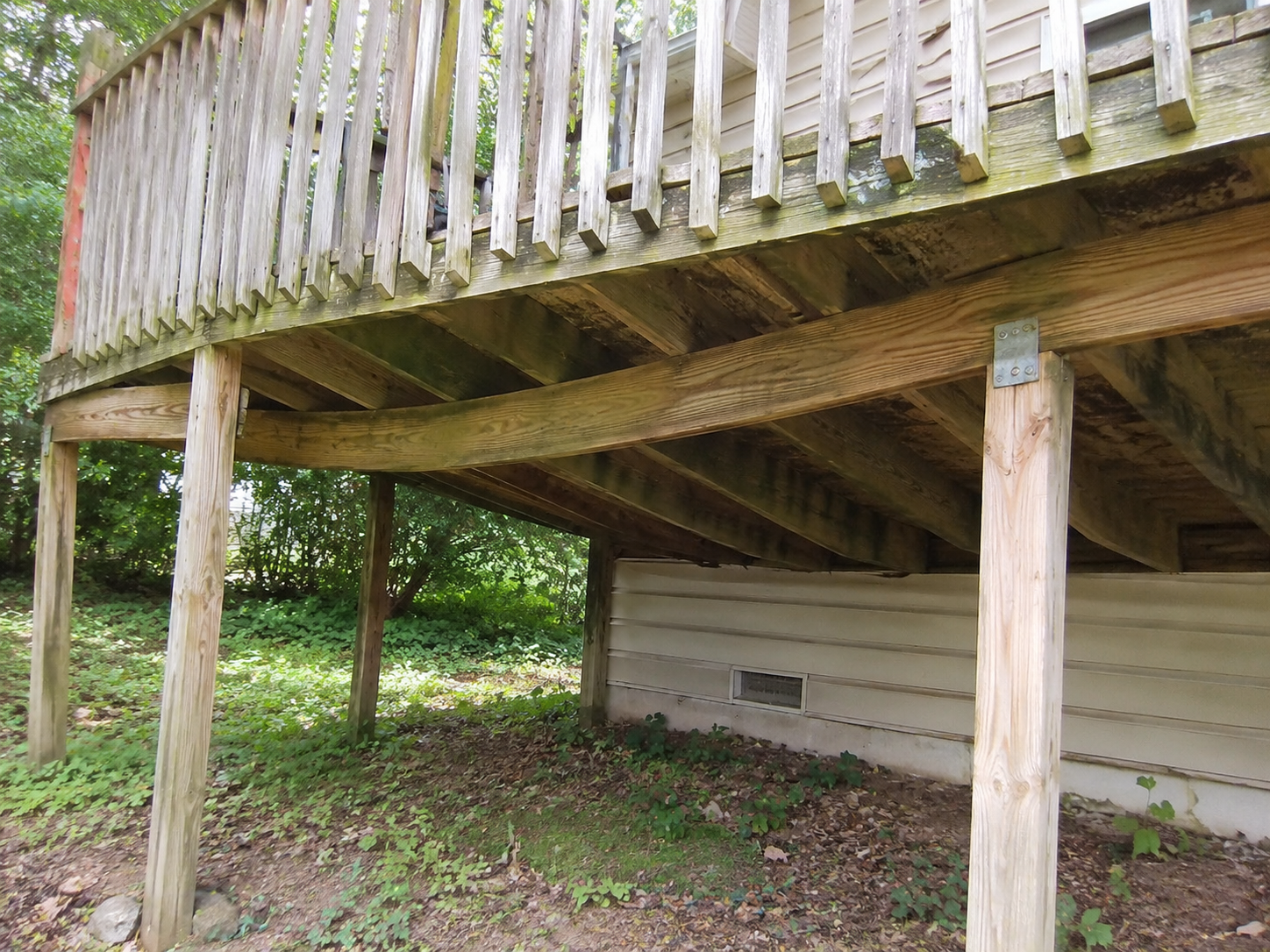
How to fix it: An engineer may recommend adding support beams, reinforcing framing members, modifying connections, or replacing components that cannot safely carry required loads. The repairs should be based on structural calculations and the deck's intended use, particularly for commercial properties or shared outdoor spaces.
What to Do After a Failed Deck Inspection in California
Discovering that your deck failed inspection can feel overwhelming, but following an organized process can help prevent unnecessary expenses, delays, and additional code violations.
Step 1: Review the Deck Inspection Report
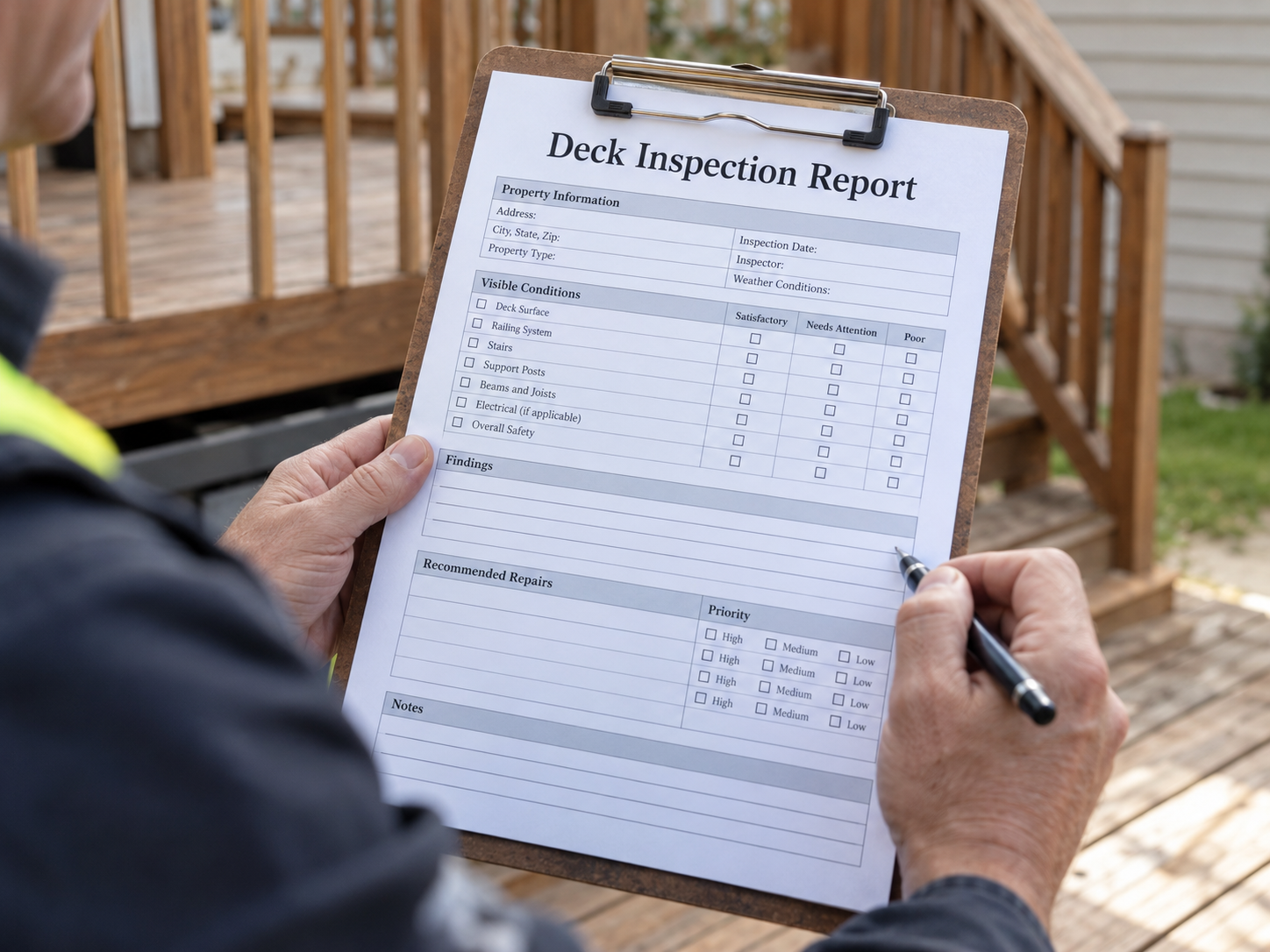
Start by carefully reviewing the inspector's written findings to understand which components failed and why. A detailed report should help distinguish between immediate safety concerns, structural deficiencies, maintenance recommendations, and documented code violations.
Look for specific descriptions of the deficiencies, photographs, applicable code references, and recommended corrective actions. If any findings are unclear, request additional clarification before proceeding with repairs.
Step 2: Restrict Access to Unsafe Areas
If the inspection identifies a potential structural failure, unstable guardrail, compromised support, or another serious hazard, restrict access to the affected deck immediately. Notify residents, tenants, or other occupants as appropriate and follow any closure instructions from the inspector or local building authority.
Avoid using or loading the deck until a qualified professional has evaluated the hazard and authorized appropriate corrective action.
Step 3: Schedule a Professional Structural Assessment
Some deck deficiencies are straightforward, while others require an experienced structural engineer to determine the full extent of the problem.
A professional assessment may help identify whether the failed components can be repaired, reinforced, or selectively replaced. It can also reveal hidden problems that weren't apparent during the initial inspection, reducing the likelihood of unexpected complications during construction.
Step 4: Develop a Code-Compliant Repair Plan
Once the deficiencies have been identified, develop a repair strategy that addresses the underlying causes rather than simply correcting visible symptoms.
Depending on the situation, this may involve engineering calculations, revised construction drawings, material specifications, or coordination with a licensed contractor. Confirm whether the proposed work requires permits and plan review through the local building department before construction begins.
Step 5: Complete Repairs and Schedule Reinspection
After obtaining any necessary approvals, have qualified professionals complete the corrective work according to the approved plans and applicable building standards.
Maintain records of completed repairs, engineering documentation, permits, and photographs. Once the work is finished, arrange any required municipal reinspection or professional follow-up evaluation to verify that the identified deficiencies have been addressed.
Does a Failed Deck Inspection Mean You Need a Full Rebuild?
No. A failed deck inspection does not automatically require complete demolition or reconstruction. In many cases, the deficiencies are limited to specific components, allowing property owners to preserve much of the existing structure.
For example, replacing damaged guardrails or reinforcing certain framing connections may resolve isolated problems without disturbing unaffected deck components. Similarly, a limited area of wood rot may require only selective structural replacement if the remaining framing is still sound.
However, full reconstruction may be more appropriate when extensive deterioration affects multiple load-bearing components, the original deck construction is fundamentally inadequate, or the cost of properly engineered repairs approaches that of replacement.
The decision should be based on a comprehensive structural assessment rather than appearance alone. A deck that looks relatively sound from above may have significant concealed deterioration, while a visibly weathered deck may still have a serviceable structural framework.
Understanding California Deck Inspection Requirements
California has established specific inspection requirements for certain exterior elevated structures through legislation commonly known as SB 721 and SB 326. These laws are particularly relevant to multifamily property owners and condominium associations responsible for maintaining elevated decks, balconies, walkways, and similar structures.

SB 721: Multifamily Apartment Buildings
SB 721 requirements, as subsequently amended, generally apply to qualifying exterior elevated elements in apartment buildings with three or more multifamily dwelling units. Covered structures typically have wood or wood-based load-bearing components and meet additional statutory criteria.
Qualifying properties are generally subject to recurring inspections every six years. Inspection findings may trigger repair, reporting, permitting, and notification obligations, particularly when unsafe conditions are identified.
SB 326: Condominium Associations
SB 326, as subsequently amended and codified in California Civil Code Section 5551, establishes inspection obligations for qualifying exterior elevated elements in condominium common interest developments.
These inspections generally occur on a nine-year cycle and focus on evaluating structural integrity and associated waterproofing systems. Associations must maintain inspection records and address identified conditions according to applicable legal and safety requirements.
Why these requirements matter: A failed deck inspection at a covered multifamily or condominium property may involve more than routine construction repairs. Owners and HOA managers may need to comply with statutory timelines, professional inspection qualifications, reporting obligations, and local enforcement procedures.
Single-family residential decks are not automatically subject to the same periodic inspection requirements, but they must still comply with applicable building and safety regulations. The exact rules depend on the structure, ownership arrangement, and local jurisdiction.
Professional Deck Inspections From The Sterling Watson Collective
At The Sterling Watson Collective, we provide full-service structural engineering services for residential, multifamily, HOA, and commercial properties throughout Los Angeles and Southern California. Our comprehensive capabilities include engineering, architecture, land development, drafting, general contracting, skilled laborers, and additional project support services. By bringing together expertise across multiple disciplines, we help property owners understand complex structural challenges and navigate the process of maintaining, repairing, and improving their buildings.
Our professional deck inspection services are designed to identify structural deficiencies, visible damage, potential code violations, and other conditions that may affect the safety and performance of your outdoor structures. We evaluate important components such as support posts, beams, joists, ledger connections, footings, guardrails, stairs, waterproofing, and structural hardware. Whether your deck failed inspection, you're managing a property subject to California's exterior elevated element requirements, or you're concerned about deterioration, our team can provide clear findings and practical recommendations to help you determine the appropriate next steps.
Deck Failed Inspection? Contact The Sterling Watson Collective Today
A failed deck inspection doesn't have to result in an expensive full rebuild. Many common code violations can be resolved through targeted repairs, structural reinforcement, or selective component replacement. The key is identifying the underlying problems, understanding the applicable California building requirements, and working with qualified professionals to develop a reliable solution.
At The Sterling Watson Collective, we help residential homeowners, HOA managers, and commercial property owners throughout Southern California evaluate deck safety, identify structural concerns, and make informed decisions about repairs and compliance.
If your deck failed inspection or you're concerned about its structural condition, contact The Sterling Watson Collective today to schedule a professional deck inspection. Our experienced team is ready to help you take the next steps toward a safer, more reliable outdoor structure.
FAQs
-
If your deck failed inspection in California, the inspector will typically identify structural deficiencies, safety hazards, or building code violations that require attention. Depending on the severity of the findings, you may need to complete repairs, obtain permits, or schedule a follow-up inspection before the deck can be safely used.
-
Common reasons include deteriorating wood, unstable guardrails, improper ledger connections, inadequate footings, corroded fasteners, and insufficient structural support. Water damage, poor drainage, and unsafe stairways can also contribute to a failed deck inspection.
-
No, a failed deck inspection does not automatically mean the entire structure must be demolished and rebuilt. Many common problems, such as loose railings, damaged boards, or inadequate structural connections, can be corrected through targeted repairs or reinforcement.
-
Repair deadlines depend on the property type, applicable California laws, local building regulations, and whether the inspection identified an immediate safety hazard. Properties subject to California's SB 721 or SB 326 requirements may have specific repair and reporting obligations, making it important to review the inspection findings promptly.